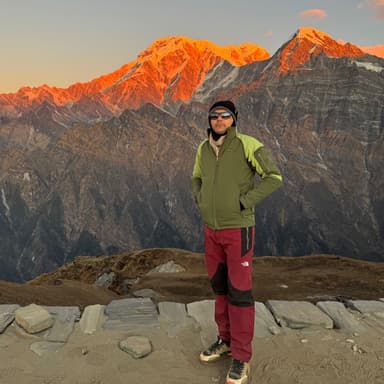
Introduction
I still remember stepping off the jeep at Syabrubesi for the first time. The Bhote Koshi River was roaring below, prayer flags were snapping in the cold morning air, and somewhere high above the treeline, glaciers were catching the early sun. After years of hearing friends rave about Everest Base Camp and Annapurna Circuit, I'd quietly chosen Langtang instead — and within ten minutes of arriving, I already knew I'd made the right call.
The 15-day Langtang Valley and Gosaikunda trek is one of those routes that doesn't shout for attention. It doesn't need to. Quietly combining three iconic trails — the Langtang Valley, the Gosaikunda pilgrimage, and the Helambu descent — it delivers everything a serious trek should: raw Himalayan scenery, genuine cultural immersion, real physical challenge, and the kind of stillness that modern life rarely allows. And it does all of this just a seven-hour drive from Kathmandu.
Whether you are planning your first Himalayan adventure or looking to escape the crowds of more famous routes, this guide covers everything you need — a complete day-by-day itinerary, the best seasons to go, packing and permit tips, and honest answers to the questions trekkers ask most. Let's start at the beginning.
Why Choose Langtang & Gosaikunda?
Nepal's trekking landscape is dominated by two giants: Everest and Annapurna. Both are spectacular — and during peak season, both can feel uncomfortably busy. Langtang offers a different kind of experience. It is the closest major trekking destination to Kathmandu, yet it retains a sense of genuine remoteness that the bigger, more commercialised routes have largely lost.
The region sits inside Langtang National Park, a protected sanctuary stretching over 1,710 square kilometres along the Tibetan border. Dense forests of oak, bamboo, rhododendron, and pine cover the lower valleys. Higher up, the terrain opens into alpine meadows, glacial moraines, and windswept ridgelines where yaks graze in the shadow of seven-thousand-metre peaks.
Wildlife is a genuine highlight here. Red pandas — elusive, rust-coloured, and frankly ridiculous-looking in the best possible way — inhabit the bamboo forests around Ghoda Tabela. Himalayan tahr pick their way across rocky slopes, musk deer thread through undergrowth, and overhead, Himalayan griffons and golden eagles trace wide circles on the thermals.
Then there is the Tamang culture. This is their homeland. The Tamang people — whose ancestry traces back centuries to Tibetan communities — have shaped every stone village, monastery, and mani wall along this trail. Their hospitality is not a tourism product; it is simply how they live. Sitting in a tea house kitchen while a grandmother pours butter tea, listening to prayer drums echo across a valley at dusk — this is the texture of the Langtang trek that photographs can't fully capture.
"Langtang doesn't try to impress you. It just does — completely, and quietly, and forever."
Gosaikunda Lake: Sacred Waters at 4,380 Metres
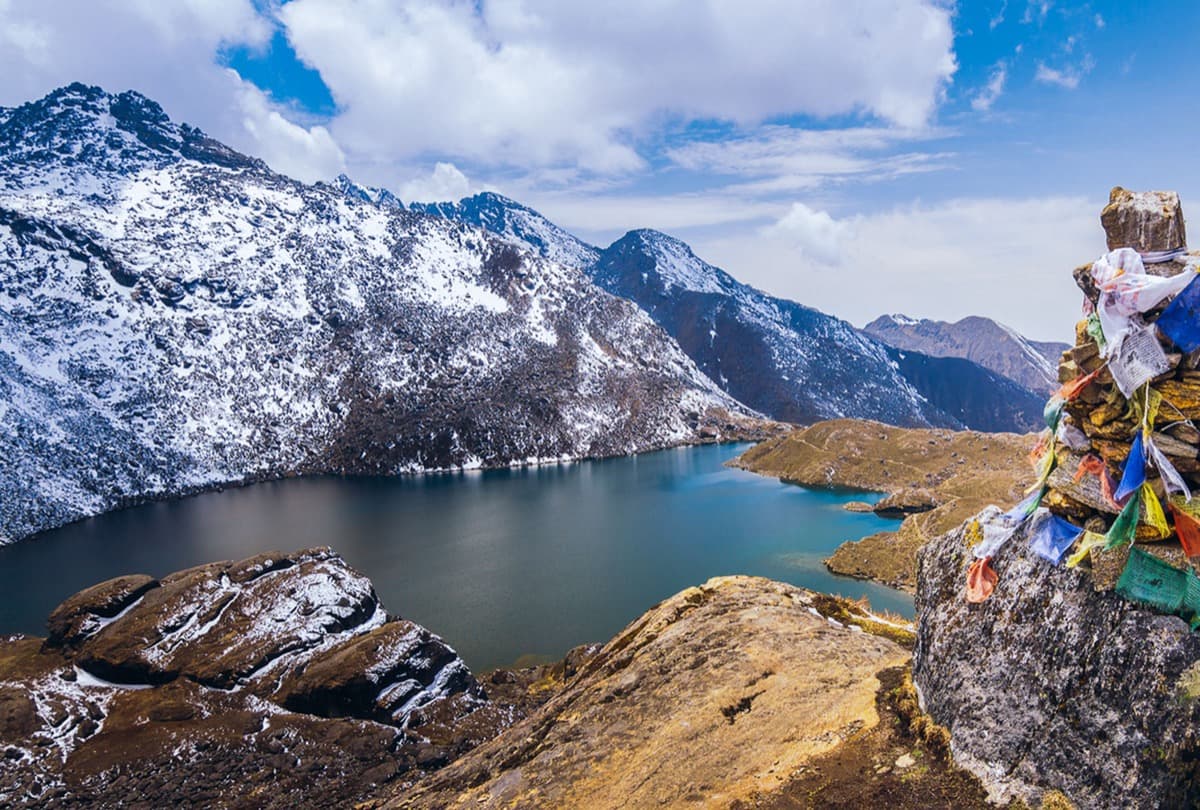
Of all the things that make this trek remarkable, Gosaikunda Lake might be the most unforgettable. Sitting at 4,380 metres in the Rasuwa District, this high-altitude lake is simultaneously one of Nepal's most important pilgrimage sites and one of its most otherworldly landscapes. The water is impossibly blue-green, the surrounding peaks rise steeply on every side, and the air at that altitude has a clarity that makes everything look slightly unreal — sharper, crisper, more vivid than it should be.
The mythology woven around the lake runs deep. Hindu tradition holds that Lord Shiva struck the frozen earth with his trident to draw water and cool his throat after consuming the poison that threatened to destroy all creation during the great cosmic churning (Samudra Manthan). The lake's name encodes that legend: "Gosai" meaning lord, "kunda" meaning lake. Nearby satellite lakes — Bhairab Kunda, Saraswati Kunda, and Surya Kunda — each carry their own sacred identity and form a loose pilgrimage circuit around the main lake.
Every year during the full moon of August, during the festival of Janai Purnima, tens of thousands of Hindu pilgrims make the high-altitude climb to bathe in these waters — one of the most extraordinary mass gatherings in all of Himalayan Nepal. For trekkers arriving outside that window, the quiet is total. Just the wind, the peaks, and the lake's cold, still surface reflecting whatever sky exists above it that day.
The 15-Day Itinerary at a Glance
This schedule is built for proper acclimatisation, a complete exploration of Kyanjin Gompa and Tserko Ri, meaningful time at Gosaikunda, and a rewarding descent through Helambu before returning to Kathmandu. It works for fit beginners and experienced trekkers alike — the pacing is considered, not rushed.
| DAY | ROUTE | NIGHT STOP | ALTITUDE | WALK TIME |
|---|---|---|---|---|
| Day 1 | Arrive Kathmandu | Kathmandu | 1,355 m | — |
| Day 2 | Trekking preparation, explore Kathmandu | Kathmandu | 1,355 m | — |
| Day 3 | Drive Kathmandu → Syabrubesi | Syabrubesi | 1,460 m | 7–8 hrs drive |
| Day 4 | Syabrubesi → Lama Hotel | Lama Hotel | 2,470 m | 5–6 hrs |
| Day 5 | Lama Hotel → Langtang Village | Langtang Village | 3,430 m | 5–6 hrs |
| Day 6 | Langtang Village → Kyanjin Gompa | Kyanjin Gompa | 3,870 m | 3–4 hrs |
| Day 7 | Acclimatisation day — Tserko Ri summit (day hike) | Kyanjin Gompa | 5,033 m (day hike) | 5–7 hrs |
| Day 8 | Kyanjin Gompa → Lama Hotel (descent) | Lama Hotel | 2,470 m | 5–6 hrs |
| Day 9 | Lama Hotel → Thulo Syabru | Thulo Syabru | 2,260 m | 5 hrs |
| Day 10 | Thulo Syabru → Sing Gompa | Sing Gompa | 3,330 m | 4–5 hrs |
| Day 11 | Sing Gompa → Gosaikunda Lake | Gosaikunda | 4,380 m | 4–5 hrs |
| Day 12 | Gosaikunda → Sing Gompa | Sing Gompa | Pass: 4,610 m | 6–7 hrs |
| Day 13 | Sing Gompa → Dhunche | Dhunche | 5–6 hrs | |
| Day 14 | Drive back to Kathmandu | Kathmandu | 1,355 m | 6–7 hrs |
| Day 15 | Departure | Kathmandu | 1,355 m | – |
Day-by-Day Highlights
Day 01: Arrival in Kathmandu (1,355 m)
Upon your arrival at Tribhuvan International Airport, you will be greeted by our representative and transferred to your hotel. After check-in, you will receive a short briefing about the trek, including safety guidelines and itinerary details. Depending on your arrival time, you may explore the lively streets of Thamel, known for its shops, cafes, and trekking gear stores. Overnight stay in Kathmandu.
Day 02: Trek Preparation & Kathmandu Valley Exploration
This day is dedicated to final preparations for the trek. You will meet your trekking guide, review your packing checklist, and ensure all necessary permits are arranged. If time permits, enjoy a guided sightseeing tour of UNESCO World Heritage Sites such as Swayambhunath Stupa (Monkey Temple), Boudhanath Stupa, and Pashupatinath Temple. These cultural landmarks provide a deep insight into Nepal’s spiritual and historical heritage. Overnight in Kathmandu.
Day 03: Drive to Syabrubesi (1,460 m)
Your adventure begins with a scenic drive from Kathmandu to Syabrubesi, the starting point of the trek. The journey takes you along winding mountain roads, offering spectacular views of rivers, terraced fields, and distant snow peaks. You will pass through small towns and rural landscapes, giving you a glimpse of everyday life in Nepal. Overnight in Syabrubesi.
Day 04: Trek to Lama Hotel (2,470 m)
The trek begins with a gentle walk along the Langtang River, crossing suspension bridges and passing through dense forests of oak, pine, and bamboo. This region is rich in wildlife, and if you’re lucky, you might spot monkeys or even the elusive red panda. The trail gradually ascends to Lama Hotel, a small settlement nestled in the forest. Overnight stay at a teahouse.
Day 05: Trek to Mundu (3,543 m)
Today’s trek takes you deeper into the Langtang Valley. As you climb higher, the forest begins to thin, revealing open landscapes and stunning mountain views. You will pass through the Langtang village area, which was rebuilt after the 2015 earthquake. Continuing onward, you reach Mundu, a peaceful village surrounded by dramatic हिमालय scenery. Overnight stay in Mundu.
Day 06: Trek to Kyanjin Gompa (3,870 m)
A relatively short but scenic trek leads you to Kyanjin Gompa, the spiritual heart of the Langtang region. This beautiful village is surrounded by towering peaks and glaciers. You can visit the ancient monastery and a local cheese factory. The rest of the day is free to explore and acclimatize while enjoying panoramic mountain views. Overnight in Kyanjin Gompa.
Day 07: Hike to Kyanjin Ri (4,775 m)
Early in the morning, hike to Kyanjin Ri, one of the best viewpoints in the region. The climb is challenging but incredibly rewarding, offering breathtaking views of Langtang Lirung, glaciers, and surrounding हिमालय peaks. After soaking in the scenery and taking photos, return to Kyanjin Gompa for rest. Overnight stay.
Day 08: Trek back to Lama Hotel (2,470 m)
Retrace your steps down the valley, enjoying the changing landscapes from a different perspective. The descent is easier, allowing you to fully appreciate the beauty of forests, rivers, and villages along the trail. Overnight in Lama Hotel.
Day 09: Trek to Thulo Syabru (2,230 m)
Leaving the main Langtang trail, you head toward Thulo Syabru, a traditional Tamang village perched on a hillside. The trail involves both ascents and descents, with rewarding views of the Ganesh Himal range. The village offers a rich cultural experience with warm local hospitality. Overnight stay.
Day 10: Trek to Sing Gompa (3,330 m)
The trail ascends through forests of rhododendron and pine. During spring, the blooming flowers create a colorful landscape. Sing Gompa is known for its monastery and locally produced yak cheese. The peaceful environment makes it a perfect place to relax and acclimatize. Overnight stay.
Day 11: Trek to Gosaikunda Lake (4,380 m)
Today is one of the most exciting days of the trek. You will climb above the tree line into alpine terrain to reach the sacred Gosaikunda Lake. This holy site is especially significant for Hindu pilgrims, particularly during Janai Purnima festival. Surrounded by rugged mountains, the lake offers a serene and spiritual atmosphere. Overnight near the lake.
Day 12: Return to Sing Gompa (3,250 m)
After enjoying the peaceful morning by the lake, descend back to Sing Gompa. The downhill trek is easier and provides more opportunities to admire the surrounding landscapes. Overnight stay.
Day 13: Trek to Dhunche
Continue descending through forests and small settlements to reach Dhunche, the district headquarters of Rasuwa. This marks the end of your trekking journey. Overnight stay.
Day 14: Drive back to Kathmandu
After breakfast, drive back to Kathmandu. The journey offers scenic views of hills, rivers, and rural villages. Upon arrival, transfer to your hotel and enjoy a relaxing evening. Overnight in Kathmandu.
Day 15: Final Departure
Your adventure in Nepal comes to an end today. Our team will transfer you to the airport for your onward journey, leaving you with unforgettable memories of the Himalayas.
Quick Facts at a Glance
Trek Essentials
When to Go: The Honest Season Guide
Autumn (September–November) is what most trekkers choose, and for good reason. After the monsoon clears, the skies turn a deep, cloudless blue, the trails are freshly green, and the mountain views are at their sharpest. Temperatures are manageable — cool but not punishing — and the cultural calendar is rich: Dashain and Tihar, Nepal's two biggest festivals, fall in this window, and the chance to witness village celebrations along the route is genuinely special.
Spring (March–May) is equally beautiful and arguably more dramatic lower down. The rhododendron forests — Nepal's national flower — explode into bloom across the lower valleys in reds, pinks, and whites. Higher up, residual winter snow on the passes adds drama and the occasional logistical complication. April is the sweet spot.
Winter (December–February) is for solitude-seekers. The trails are nearly empty, the sky is often clear, and the frozen surface of Gosaikunda Lake is described by those who've seen it as one of the most surreal sights in all of Nepal. Nights are genuinely cold, especially above 3,500 metres — a quality sleeping bag rated to −15°C is non-negotiable.
Monsoon (June–August) is generally avoided, though the Janai Purnima pilgrimage season brings thousands of devotees to Gosaikunda in August — a remarkable human spectacle if you don't mind the rain and muddier trails.
Practical Tips to Get This Right
🏋 FITNESS PREP
Start training 6–8 weeks before departure. Hiking, stair climbing, and running all help. Your knees will thank you on the Laurebina La descent.
🏔 ACCLIMATISATION
Never skip the rest day at Kyanjin Gompa. Altitude sickness doesn't care about your itinerary. For more, read our AMS prevention guide.
🎒 WHAT TO PACK
Layers, layers, layers. Temperatures swing from 15°C in the valley to −10°C at high camp. See our full Nepal trekking packing list.
💧 WATER & HEALTH
Carry water purification tablets or a filter. Watch for AMS signs — headache, nausea, dizziness. If symptoms worsen, descend immediately. No summit is worth your health.
📋 PERMITS
Collect your TIMS card and Langtang National Park Entry Permit in Kathmandu before you leave. Visit our permits guide for full details and current fees.
🤝 GUIDE & PORTERS
A licensed local guide transforms this trek from a walk into a cultural journey. Hiring porters from Syabrubesi directly supports the Tamang community and the local economy.
A Trek That Gives Back
This matters more on this particular route than almost anywhere else in Nepal. Langtang Valley was one of the areas hardest hit by the 2015 earthquake, which triggered an avalanche that buried much of the original Langtang Village under debris. The community rebuilt — slowly, painfully, with remarkable resilience — and today the village is alive again, though the trauma is not forgotten.
Every trekker who walks this route and spends money at local tea houses, buys yak cheese from local producers, hires Tamang guides and porters, and travels thoughtfully is directly contributing to an economy that needs it. This is not just good ethics — it is part of what makes the trek meaningful. You are not a tourist passing through. You are a participant in something.
Compare this to some of the most popular treks in Nepal, where large-scale tourism infrastructure has, in places, diluted the local economic benefit. Langtang is still at a scale where individual trekker choices genuinely matter.
Frequently Asked Questions
How difficult is the Langtang Gosaikunda trek for beginners?
The trek is rated moderate to challenging, but the 15-day itinerary is specifically designed with proper acclimatisation time to make it accessible for fit beginners. You don't need prior trekking experience in Nepal, but you do need a reasonable cardiovascular fitness level. If you can comfortably hike 5–6 hours in a day and have trained beforehand, you'll be well-prepared. The steepest sections are the Tserko Ri day hike and the Laurebina La Pass crossing — both challenging but rewarding rather than technical.
You need two permits: the Langtang National Park Entry Permit and the TIMS (Trekkers' Information Management System) card. Both can be obtained in Kathmandu from the Nepal Tourism Board office on Pradarshani Marg, or through a registered trekking agency. The process is straightforward and typically takes under an hour. Bring passport-sized photos and a copy of your passport. For current fees and step-by-step instructions, see our Nepal trekking permits guide.
As of recent regulations, foreign trekkers in Nepal are required to trek with a licensed guide on most routes, including Langtang. Beyond the legal requirement, a local guide adds an entirely different dimension to the experience — cultural context, language access, trail knowledge, and safety support, particularly at altitude. We strongly recommend hiring your guide through a registered trekking agency or directly from the Syabrubesi area, which keeps more economic benefit within the local Tamang community.
Costs vary depending on whether you go independently (with a guide) or book a full package. A self-arranged trek with a local guide typically costs USD 40–70 per day including accommodation, meals, and guide/porter fees. Full agency packages range from USD 800 to USD 1,500 for 15 days depending on group size, inclusions, and operator. Budget trekkers staying in basic tea houses and travelling in groups can bring per-day costs down considerably. Permits add a fixed cost of approximately USD 30–40 total.
Yes — it is a genuine risk on any trek above 3,000 metres, and this route reaches 5,033 m on Tserko Ri and crosses Laurebina La at 4,610 m. The 15-day itinerary includes proper acclimatisation days specifically to reduce this risk. Key warning signs of Acute Mountain Sickness (AMS) include persistent headache, nausea, dizziness, and loss of appetite. If symptoms develop and worsen, descend immediately — never push higher. Carry Diamox if prescribed by your doctor, stay well-hydrated, and ascend no faster than your body allows. For a full prevention checklist, see our guide to AMS prevention.
October and November are generally considered the best months — post-monsoon skies are crystal clear, temperatures are manageable at all altitudes, and the mountain views are at their most dramatic. April and May are the best spring months, with rhododendron forests in full bloom in the lower valleys. March can still have snow on higher passes. If you want empty trails and don't mind cold, late December through February is possible but demands more preparation. Avoid June through August for trekking unless you specifically want to witness the Janai Purnima pilgrimage at Gosaikunda.
Yes. A 12-day version is very popular — you skip the Helambu extension and return from Gosaikunda to Dhunche by road, from where you drive back to Kathmandu. A 10-day version focuses purely on the Langtang Valley (Kyanjin Gompa) and Gosaikunda without the high pass crossing.
Tea houses (basic guesthouses serving meals) line the entire route. Accommodation is simple but adequate — typically a small private room with twin beds, a communal dining hall, and shared bathrooms. Hot showers are available at most stops for a small extra fee. Food is hearty and filling: dal bhat (the national dish of lentils, rice, and vegetables) is the staple, alongside momos (dumplings), noodle soups, fried rice, omelettes, and porridge. The locally produced yak cheese at Kyanjin Gompa and Shin Gompa is a genuine highlight — do not leave without trying it.
Final Thoughts: Why This Trek Stays With You
There are treks that tick boxes, and there are treks that leave marks. The Langtang Valley and Gosaikunda route is firmly in the second category. It won't dazzle you with infrastructure or overwhelm you with fellow trekkers. What it will do — quietly, steadily, over fifteen days — is show you the Himalayas on their own terms.
You'll walk through forests that feel genuinely ancient. You'll share meals with families whose grandparents walked the same trails. You'll stand on Tserko Ri at sunrise and understand, in your body rather than your head, just how large this world actually is. And then you'll sit at the edge of Gosaikunda Lake in the early morning and feel, unexpectedly, completely at peace.
That's what this trek does. It starts as a walk and ends as something else — a recalibration. A reminder that the world still contains places where the noise stops and something older and quieter takes over. Langtang asks for your feet and your patience. In return, it gives you something you won't easily forget.
Ready to start planning? Explore our full range of Nepal trekking routes, check your permit requirements, and build your packing list — and then go. The mountains have been waiting long enough.