How to avoid altitude sickness during trekking in Nepal is a critical consideration for any mountaineer planning an adventure in this breathtaking region.
As you ascend to higher altitudes, your body encounters decreasing oxygen levels, which can lead to potentially serious symptoms.
Understanding the physiological changes your body undergoes is essential to ensure a safe and enjoyable trekking experience. In this guide, we will explore practical strategies on how to avoid altitude sickness during trekking in Nepal, emphasizing gradual acclimatization and proper hydration techniques.
You'll discover the importance of listening to your body and the benefits of recognizing the early signs of altitude sickness before they escalate.
By following expert advice and taking necessary precautions, you can focus on the stunning vistas and unique culture that make Nepal a premier destination for trekkers.
Prepare to embark on your journey with confidence and peace of mind!
Key Takeaways
- Acclimatization Techniques: Gradually ascending to higher altitudes allows your body to adapt to decreased oxygen levels, minimizing the risk of encountering serious symptoms of altitude sickness.
- Hydration Importance: Staying well-hydrated is crucial, as dehydration can exacerbate the effects of altitude, making you more susceptible to fatigue and other ailments.
- Dietary Considerations: Consuming a balanced diet rich in carbohydrates helps maintain energy levels and supports your body's adaptation to high-altitude conditions.
- Recognizing Symptoms: Being aware of early symptoms such as headaches or nausea enables you to take prompt action, potentially preventing more severe issues from developing.
- Descent Strategy: If symptoms worsen, descending to a lower altitude is often the most effective way to relieve discomfort and safeguard your overall health during your trekking adventure.
Understanding Altitude Sickness: What You Need to Know
Altitude sickness occurs when your body struggles to adapt to reduced oxygen levels at high elevations.
It typically affects individuals hiking above 8,000 feet, with symptoms ranging from headaches and nausea to dizziness and fatigue.
Knowing how to avoid altitude sickness during trekking in Nepal is essential for a safe and enjoyable experience.
Proper acclimatization, including ascending slowly and allowing your body time to adjust, can significantly reduce the risk of these symptoms.
"Each step you take in the mountains is a celebration of your body's resilience; listen to it, and it will guide you safely." - Dr.Eva Hassler, Altitude Medicine Specialist
To minimize the chances of experiencing altitude sickness, stay well-hydrated, and avoid heavy meals before ascending.
Trekking in Nepal can be a rewarding journey, but awareness of these health risks helps ensure a memorable adventure.
Consider planning your route to include rest days, allowing your body the necessary time to acclimatize fully.
Acclimatization Techniques to Prevent Altitude Sickness
One of the most effective strategies on how to avoid altitude sickness during trekking in Nepal is proper acclimatization.
This process involves gradually increasing your elevation to allow your body to adapt to decreased oxygen levels.
During your ascent, aim to spend an extra night at certain elevations, even if you feel well.
For example, if you reach a height of 3,500 meters, consider staying for an additional day at that level before proceeding.
This will enhance your body’s ability to produce red blood cells and improve oxygen delivery.
Additionally, monitor your body’s reactions closely; listen to signs of fatigue or dizziness, and descend if necessary.
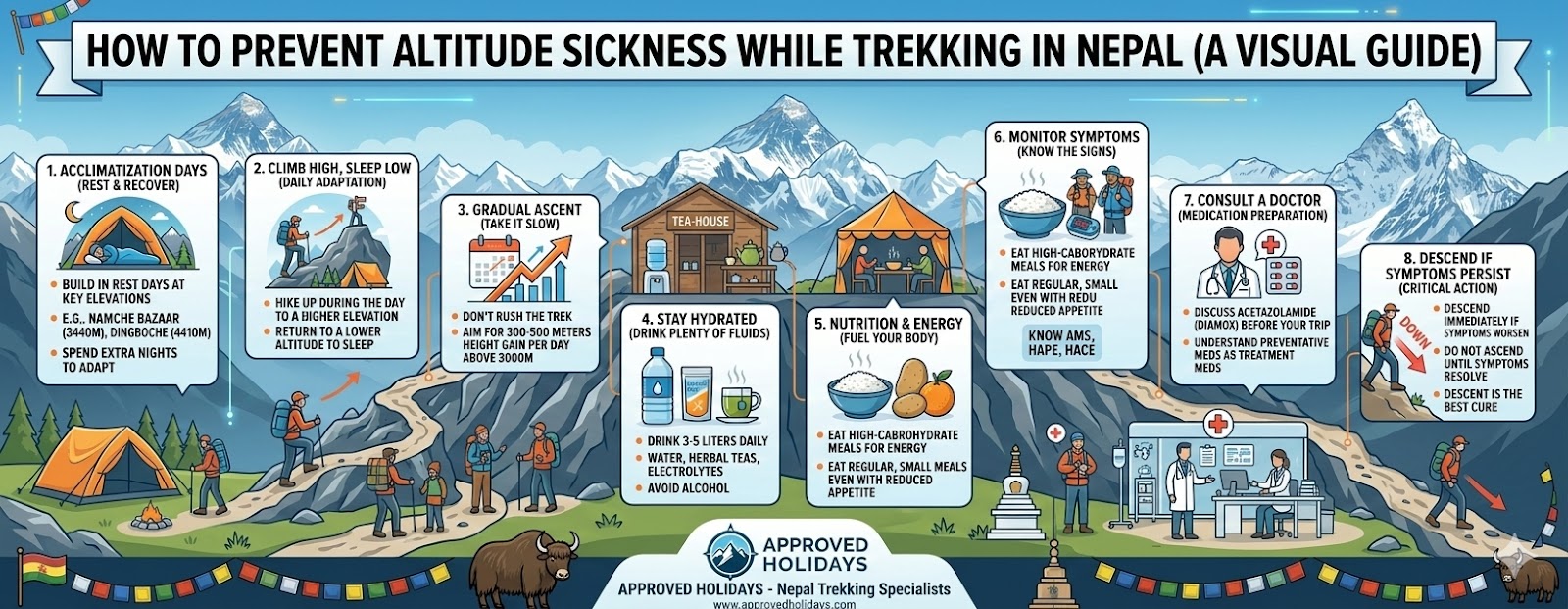
Understanding Acclimatization for Safe Trekking in Nepal
One of the most effective strategies on how to avoid altitude sickness during trekking in Nepal is proper acclimatization.
Gradually ascending to higher elevations allows your body to adjust to decreasing oxygen levels.
Aim to increase your sleeping altitude by no more than 300 meters each day after reaching 3,000 meters.
Incorporate rest days to give your body time to adapt; for example, spending an additional night at a lower elevation can enhance your chances of avoiding illness.
Staying hydrated and consuming a balanced diet rich in carbohydrates will further support your body's acclimatization process, ensuring a safer and more enjoyable trek.
Recognizing the Symptoms of Altitude Sickness Before You Trek
When planning your trek in the majestic mountains of Nepal, it’s vital to recognize the symptoms of altitude sickness.
Understanding these signs can prevent serious complications during your adventure.
Common symptoms include headaches, nausea, dizziness, and fatigue.
These conditions arise as your body struggles to adapt to lower oxygen levels at high elevations.
To effectively manage your wellbeing, closely monitor how you feel as you ascend.
If symptoms become troubling, it might be necessary to descend to a lower altitude.
| Symptom | Description | Action Needed |
|---|---|---|
| Headache | Persistent pain, often worsening with altitude | Hydrate and monitor |
| Nausea | Stomach unease or vomiting | Rest and reconsider ascent rate |
| Dizziness | Feeling lightheaded or unstable | Reduce elevation gain |
| Fatigue | Extreme tiredness disproportionately to effort | Take a break and hydrate |
For those considering the iconic Everest Base Camp Trek, being proactive about altitude sickness is crucial.
Implementing gradual ascension, staying well-hydrated, and allowing proper acclimatization can significantly ease your experience.
Learning how to avoid altitude sickness during trekking in Nepal not only enhances your safety but also enriches your trekking experience, not allowing altitude to hold you back from enjoying the breathtaking views.
Implementing Proper Acclimatization Techniques
To effectively learn how to avoid altitude sickness during trekking in Nepal, it is crucial to prioritize acclimatization.
Gradually ascending to higher altitudes allows your body to adapt to decreased oxygen levels.
For instance, if you're trekking to Everest Base Camp, consider spending an extra day in Namche Bazaar at 3,440 meters.
This extended stay helps your body adjust, enhancing overall performance and minimizing the risk of sickness.
Moreover, pacing yourself is equally important; maintain a slow and steady rhythm during climbs to avoid overexertion.
Always listen to your body and respond promptly to any emerging symptoms to safeguard your health.
Gradual Ascent: A Key Strategy for Avoidance
One of the most effective strategies on how to avoid altitude sickness during trekking in Nepal is to implement a gradual ascent.
This allows your body to adapt to changing elevations more effectively.
Aim to ascend no more than 300-500 meters each day once you exceed 3,000 meters.
Incorporate rest days, especially after significant gains in altitude, to aid in acclimatization.
If you ever feel symptoms such as headaches or fatigue, consider descending to a lower elevation.
This adjustment can often alleviate symptoms and improve your overall trekking experience, ensuring a safe and enjoyable adventure in the breathtaking Himalayas.
Essential Preparations: How to Acclimatize Effectively
To effectively prevent altitude sickness during your trekking adventure in Nepal, proper acclimatization is crucial.
As you ascend, your body needs time to adjust to the decreasing levels of oxygen.
Begin by allowing for gradual ascents; hike slowly and spend extra days at intermediate altitudes before reaching higher elevations.
Keep in mind that even popular trails like the Annapurna Circuit Trek can lead to altitude sickness if you don’t acclimatize properly.
Implement a few practical strategies: stay hydrated, eat nutritious meals, listen to your body, and recognize the symptoms of altitude sickness early.
Specifically, consider these essential tips:
- Gradually increase your trekking altitude.
- Stay hydrated by drinking plenty of water.
- Monitor your physical condition regularly.
- Use a guide familiar with altitude issues.
- Take time to rest and acclimatize at key points.
By understanding how to avoid altitude sickness during trekking in Nepal, you enhance not only your safety but also your overall trekking experience.
Gradual Ascent: Key to Preventing Altitude Sickness
When considering how to avoid altitude sickness during trekking in Nepal, implementing a gradual ascent is crucial.
This approach allows your body to acclimatize effectively, reducing the risk of discomfort.
For instance, ascending no more than 300 to 500 meters per day can significantly enhance your body's ability to adapt.
Additionally, plan to spend extra days at critical altitudes, such as Namche Bazaar, to facilitate recovery.
Don't underestimate the importance of staying hydrated during this process; adequate fluid intake is essential for combating altitude-related symptoms.
Ultimately, pacing yourself and listening to your body will ensure a safer and more enjoyable trekking experience.
Strategies for Hydration to Prevent Altitude Sickness
One crucial strategy for how to avoid altitude sickness during trekking in Nepal is maintaining proper hydration.
Dehydration can exacerbate symptoms of altitude sickness, so drink water consistently throughout your trek.
Aim for at least three liters per day, especially when traversing challenging elevations.
Carry a reliable water filtration system or purification tablets to ensure access to safe drinking water.
Additionally, consider electrolyte-replenishing drinks, as they can help maintain your body’s fluid balance at high altitudes.
Be mindful of your hydration habits, as even mild dehydration can lead to fatigue and increase the risk of altitude-related issues during your adventure.
Practical Tips to Prevent Altitude Sickness on Your Trek
To effectively manage your health while trekking in high altitudes, understanding how to avoid altitude sickness during trekking in Nepal is crucial.
Gradual acclimatization is essential; ascend slowly, allowing your body time to adapt to reduced oxygen levels.
In practice, consider spending an extra day at key elevations to monitor how you feel.
Hydration plays a vital role as well; drink plenty of water to stay hydrated, as dehydration can worsen symptoms.
Additionally, pay attention to your diet; consuming easily digestible foods helps maintain energy without overtaxing your system.
Lastly, listening to your body is key; if you experience persistent symptoms, do not hesitate to descend to a lower altitude.
Taking these practical steps will significantly enhance your trekking experience and safeguard your well-being in the beautiful landscapes of Nepal.
Monitor Your Symptoms and Stay Hydrated
To effectively learn how to avoid altitude sickness during trekking in Nepal, it's essential to monitor your symptoms closely.
Watch for signs such as boredom, headaches, or fatigue, which could indicate the onset of altitude sickness.
Recognizing these symptoms early allows you to take appropriate action, such as descending to a lower elevation or resting more frequently.
A vital part of your strategy should also involve maintaining proper hydration.
Aim to drink at least three to four liters of water daily to help combat altitude-related issues.
Staying hydrated not only aids in acclimatization but also keeps your body functioning optimally, enhancing your trekking experience significantly.
Importance of Acclimatization for High-Altitude Trekking
One of the key strategies on how to avoid altitude sickness during trekking in Nepal is proper acclimatization.
Begin your trek by ascending gradually, allowing your body to adjust to the decreasing oxygen levels.
For instance, if you are trekking towards Everest Base Camp, take a break to rest at Namche Bazaar, spending an additional day to adapt.
Also, incorporate rest days into your itinerary, especially after significant climbs.
By maintaining a slow and steady pace, you can enhance your body’s ability to acclimatize efficiently.
Remember, pushing too hard might lead to serious complications, so listen to your body and prioritize health over speed.
What To Do If You Experience Altitude Sickness While Trekking
Experiencing altitude sickness can be alarming, but understanding how to respond can significantly improve your situation.
If you begin to feel symptoms such as headaches, dizziness, or nausea, it is crucial to immediately stop and rest.
This allows your body to acclimatize to the altitude.
Make sure to hydrate well with fluids, preferably water or electrolyte drinks, to combat dehydration, which can worsen symptoms. If symptoms persist or worsen over the next few hours, it may be necessary to descend to a lower elevation.
Even a drop of a few hundred meters can provide relief.
Additionally, avoid manipulating your pace; instead, focus on slow, steady movements and prioritize rest.
Remember, understanding how to avoid altitude sickness during trekking in Nepal includes planning for unexpected challenges.
Your health and safety should always come first.
Effective Hydration Strategies to Prevent Altitude Sickness
To successfully learn how to avoid altitude sickness during trekking in Nepal, maintaining optimal hydration is crucial.
As you ascend, the air becomes drier and your body loses fluids rapidly, increasing the risk of altitude sickness.
Aim to drink at least three to four liters of water daily, adjusting as needed depending on your activity levels.
Incorporating electrolyte solutions can also help maintain your body's balance and improve overall hydration efficiency.
Regularly sip water throughout the day rather than consuming large amounts at once, which can enhance absorption and keep your energy levels stable while trekking.
Prioritize Gradual Ascent to Combat Altitude Sickness
When considering how to avoid altitude sickness during trekking in Nepal, one of the most effective strategies is to prioritize gradual ascent.
As you ascend, your body requires time to acclimatize to decreasing oxygen levels.
For instance, ascend no more than 300 to 500 meters per day after reaching altitudes above 2,500 meters.
This can significantly enhance your body's ability to adapt.
Additionally, incorporate rest days into your itinerary, particularly after reaching elevations of 3,000 to 4,000 meters.
This enables your body to adjust and reduces the risk of altitude-related issues, allowing for a more enjoyable and safe trekking experience.
Conclusion
In summary, achieving a successful trekking experience in Nepal hinges on your ability to manage altitude sickness effectively.
By gradually ascending, staying well-hydrated, maintaining a balanced diet, and allowing your body ample time to acclimatize, you can significantly reduce the chances of feeling the unpleasant effects of high altitudes.
Moreover, recognizing the symptoms early and being prepared to descend if necessary can ensure your safety and enjoyment throughout your adventure. As you prepare for your trekking journey, keep these crucial strategies at the forefront of your mind.
Create a personalized plan that incorporates gradual elevation gains and prioritize your health over reaching your destination quickly.
Remember, every trekker's body reacts differently to altitude, so listen to yours and adjust accordingly. Now, as you gear up for your expedition in the majestic landscapes of Nepal, ask yourself: how will you ensure that you not only conquer the heights of the Himalayas but also fully savor the experience, healthy and unhindered?
Embrace the challenge with knowledge and preparation, and let the mountains offer you the journey of a lifetime.
Happy trekking!
Frequently Asked Questions (FAQs)
What are the early signs of altitude sickness to watch for while trekking in Nepal?
Early signs of altitude sickness often present as headaches, nausea, dizziness, and fatigue.
Trekkers should be attentive to these symptoms and prioritize descending if they worsen.
It’s crucial to communicate these feelings with your group.
Identifying these warning signs early can prevent more severe complications, ensuring a safer trekking experience in the challenging conditions of elevated altitudes.
How can I acclimatize effectively before starting my trek?
Acclimatization is vital for preventing altitude sickness.
Start your trek with gradual elevation increases, allowing at least one rest day for every 3,000 feet gained.
Stay adequately hydrated, consume high-carbohydrate foods, and avoid excessive physical exertion in the initial days.
This practice helps your body efficiently adjust to the lower oxygen levels, significantly reducing the risk of altitude-related issues during your trek in the Himalayan region.
What role does hydration play in preventing altitude sickness?
Staying well-hydrated helps your body cope with decreased oxygen availability at higher altitudes.
Dehydration can exacerbate the early signs of altitude sickness, making it essential to drink plenty of fluids throughout your trek.
Aim for at least 3-4 liters of water daily, depending on your activity level.
This practice enhances your body's adaptation to altitude and overall physical performance while trekking in challenging environments.
Are there specific medications to consider for altitude sickness?
Acetazolamide (Diamox) is a commonly used medication to prevent altitude sickness.
It promotes acclimatization by facilitating breathing and enhancing oxygen delivery throughout the body.
For effective results, start taking it a day or two before your trek and continue during initial ascent.
However, consult with a healthcare professional about dosage and suitability for your health conditions, ensuring it complements your trekking plans.
What dietary considerations should I keep in mind while trekking in Nepal?
Consume a diet rich in carbohydrates while trekking, as they provide essential energy for your activities.
Foods like pasta, rice, and fruits are great options.
Limit alcohol and heavy meals, as they can hinder acclimatization.
Maintaining a balanced diet will support your body's adaptation to high altitude conditions.
Additionally, monitor your appetite, as a reduced desire to eat is common at higher elevations.