Introduction
If you close your eyes and picture the ultimate Himalayan trek, your mind probably goes straight to a few classic images: massive walls of snow closing in around a vibrant green valley, ancient stone monasteries draped in prayer flags, and a local family offering you a steaming cup of tea. For decades, hikers have flown straight toward Everest or Annapurna to find this.
But things are changing on the ground in Nepal. Lately, more and more travelers are skipping the crowded, commercialized trails of the "big two" and turning their attention toward something a bit wilder and much quieter. They are looking for the Langtang Valley Trek.
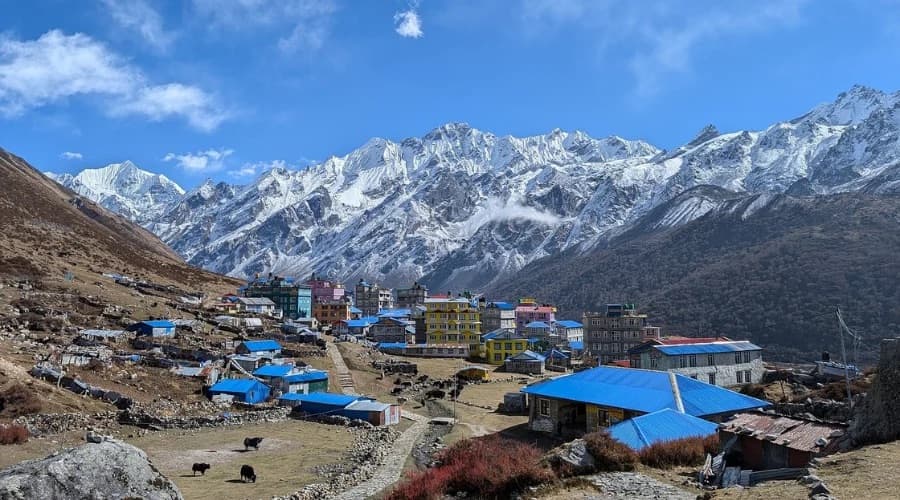
Known as "The Valley of Glaciers," Langtang sits surprisingly close to Kathmandu, yet it feels worlds away from the tourist hubs. It gives you all the vertical drama of a massive mountain amphitheater but keeps things intimate. Here, you can still walk for hours hearing nothing but the rush of the river and the wind through the pines.
Whether you’re a seasoned trekker looking for a peaceful alternative or a fit beginner who wants the grandeur of the Himalayas without the stress of domestic mountain flights, this valley delivers. Let’s dive into everything you need to know to make Langtang your next big trip.
Overview of Destination
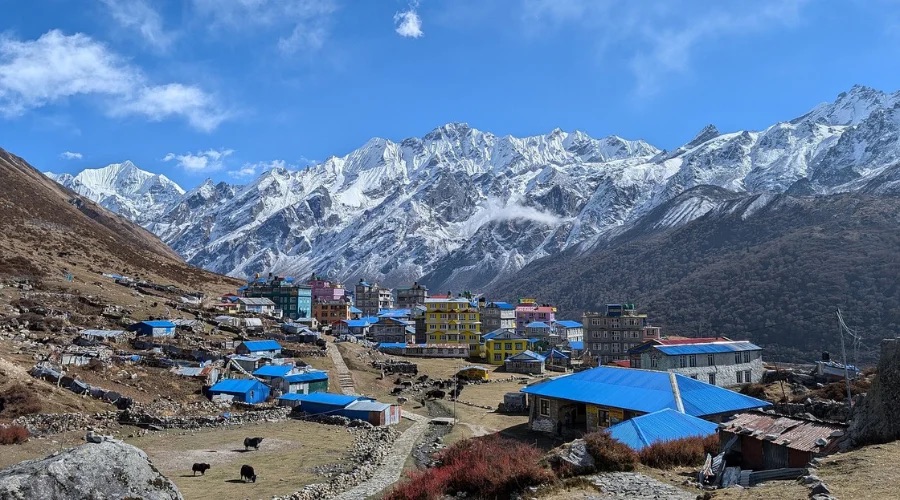
The Langtang Valley is tucked away inside Langtang National Park, which holds the title of Nepal’s very first Himalayan national park (established back in 1976). The valley runs from east to west, sitting just a short distance south of the Tibetan border.
Quick Facts:
-
The Trailhead: Syabrubesi, sitting at 1,460 m (4,790 ft).
-
The Highest Points: Kyanjin Ri (4,773 m / 15,660 ft) or the higher summit of Tserko Ri (4,984 m / 16,351 ft).
-
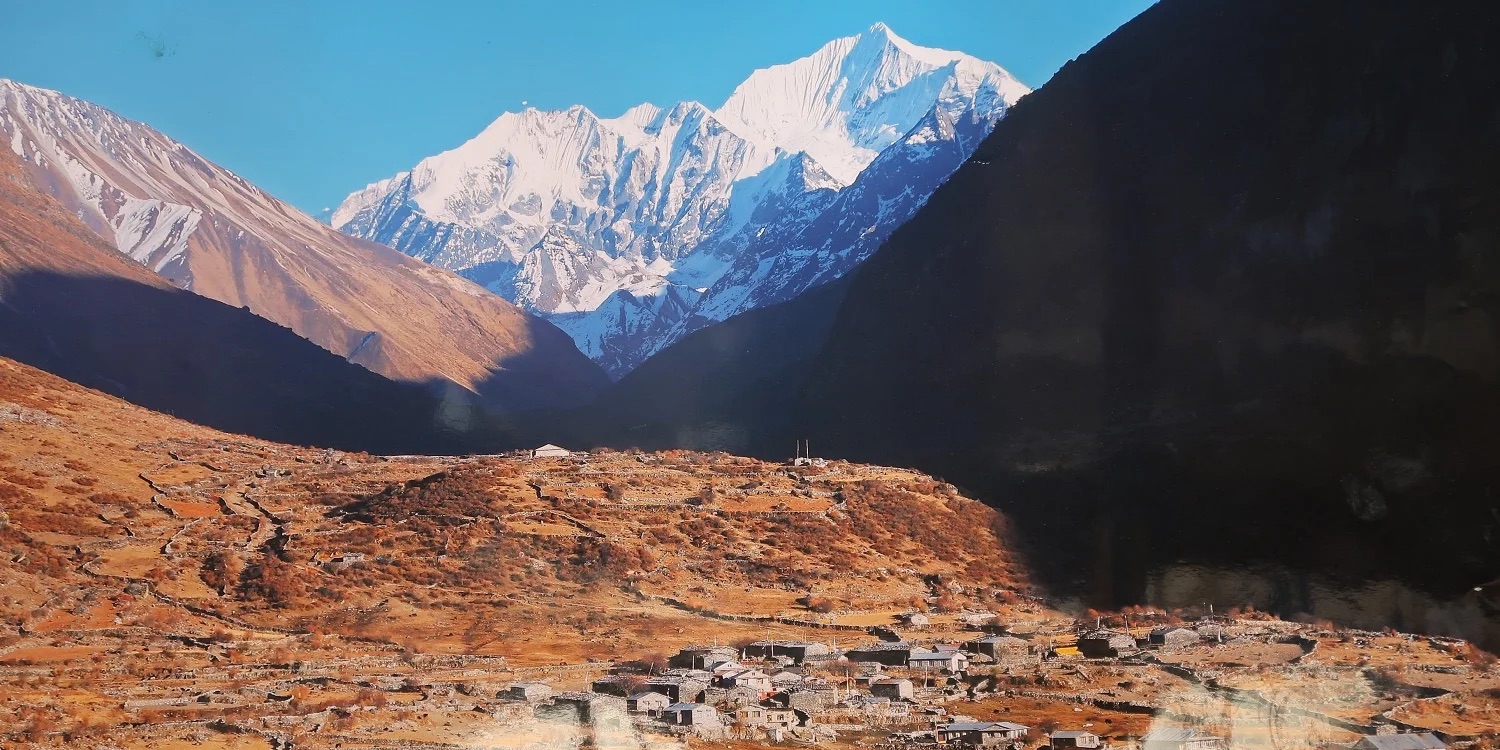
The Peaks You'll See: Langtang Lirung (7,234 m), Dorje Lakpa (6,966 m), and Gangchempo (6,388 m).
-
Wildlife: The park is a sanctuary for rare species like the red panda, Himalayan tahr, and elusive snow leopards.
What makes Langtang truly special isn't just the geography—it’s the story of the people. In 2015, a massive earthquake triggered an avalanche that completely destroyed the original Langtang Village. Today, the valley is a beautiful testament to human resilience. The local Tamang and Tibetan-descended communities have completely rebuilt. They’ve constructed comfortable eco-lodges and restored the trails with better safety infrastructure than ever before. Traveling here puts your money directly into the pockets of the families who built this valley back up from the bedrock.
Best Time to Visit
Getting your timing right is the secret to scoring those postcard-perfect mountain views. Langtang follows the classic Nepali trekking calendar, offering two primary windows.
Autumn (September to November)
This is the gold-standard window. Once the summer rains clear out by mid-September, a steady weather pattern settles over Nepal. The air is crisp and completely free of dust, giving you sharp, uninterrupted views of Langtang Lirung from sunrise to sunset. Days are perfect for walking (around 15∘C to 20∘C in the lower valleys), though you will definitely need a thick down jacket the moment the sun drops behind the peaks.
Spring (March to May)
If you prefer a bit more color, spring is magical. The lower pine and oak forests transform into a massive canopy of pink, red, and white blooming rhododendrons. Days are warmer than in autumn, and yaks move back up to the high pastures to graze. The only real trade-off is that clouds tend to build up in the afternoons, so you’ll want to start your hiking days early to catch the clear morning views.
Difficulty Level
The Langtang Valley Trek is generally rated as moderate. It doesn’t demand technical mountaineering skills, and unlike the Everest Base Camp trek or the high passes of Annapurna, you won't be sleeping at extreme, oxygen-deprived altitudes for days on end.
Why it's highly achievable:
-
Steady Climbing: The trail follows a river valley, meaning you climb at a steady, manageable pace that helps your body naturally adapt to the altitude.
-
Reasonable Days: Most days involve about 5 to 7 hours of walking, covering roughly 10 to 14 kilometers.
-
Lower Sleeping Altitudes: Your highest night on the trail is spent at Kyanjin Gompa (3,870 m / 12,696 ft). Because you sleep below the 4,000-meter mark, the risk of severe altitude sickness is much lower.
The parts that will test you:
Don't mistake "moderate" for an easy stroll. The first two days from Syabrubesi up to Lama Hotel are a serious, continuous uphill grind over stone stairs and tree roots. It will test your calves and thighs. Also, if you decide to take on the optional day-hikes up Kyanjin Ri or Tserko Ri, you’ll be pushing your body up steep, loose scree near 5,000 meters, where every step takes deliberate effort.
The Classic 8-Day Itinerary
While you can easily extend this trip to include the sacred lakes of Gosaikunda, the classic 8-day route is the perfect baseline for a safe, rewarding trek.
Day 1: Kathmandu to Syabrubesi
-
Time on the road: 7 to 8 hours
-
The Experience: You start with a classic, bumpy Nepali road trip. Leaving Kathmandu, the road twists along deep river gorges and cliffside highways, offering views of terraced farms and rural life. It’s rough in spots, but it gets you straight to the trailhead at Syabrubesi without needing a domestic flight.
Day 2: Syabrubesi to Lama Hotel
-
Walking time: 5 to 6 hours
-
The Experience: Time to lace up your boots. You’ll cross a suspension bridge over the Bhote Koshi River and plunge straight into the green forests of the national park. The trail climbs steadily alongside the roaring Langtang Khola river. Keep an eye out for langur monkeys swinging through the bamboo before you settle into the jungle clearing of Lama Hotel.
Day 3: Lama Hotel to Langtang Village
-
Walking time: 5 to 6 hours
-
The Experience: As you climb today, the dense jungle gives way to open, alpine country. At Ghodatabela, the valley opens up, and you get your first massive view of Langtang Lirung. You’ll pass stone mani walls carved with Buddhist mantras and grazing yaks before arriving at the newly rebuilt Langtang Village.
Day 4: Langtang Village to Kyanjin Gompa
-
Walking time: 3 to 4 hours
-
The Experience: A shorter, gentler half-day walk designed to help you acclimatize. The trail winds through wide alpine pastures and crosses small glacial streams. By lunchtime, you’ll arrive in Kyanjin Gompa, a beautiful village set in a natural mountain bowl that features an old monastery and a local yak cheese factory.
Day 5: Exploration Day (Kyanjin Ri or Tserko Ri)
-
Walking time: 3 to 7 hours depending on your choice
-
The Experience: This is the highlight of the entire trip. You have two main options depending on your energy levels:
-
Kyanjin Ri (4,773 m): A steep, rewarding 3-to-4-hour round trip right behind the village with incredible views of the icefalls.
-
Tserko Ri (4,984 m): A tough, 6-to-7-hour climb. Reaching the top rewards you with a massive, 360-degreeview of over twenty Himalayan peaks stretching all the way to Tibet.
-
Day 6: Kyanjin Gompa to Lama Hotel
-
Walking time: 6 to 7 hours
-
The Experience: With gravity on your side, you begin the journey back down the valley. The trail you spent three days climbing is easily covered in one long, satisfying descent. As you drop back into the thicker air of the forests, you’ll likely feel a massive burst of energy.
Day 7: Lama Hotel to Syabrubesi
-
Walking time: 4 to 5 hours
-
The Experience: A beautiful, easy final day on the trail. You'll retrace your steps along the river, enjoying the warmer air of the lower elevations. Back in Syabrubesi, it’s time to celebrate a successful trip with your guide and porters over a hot shower and a cold drink.
Day 8: Syabrubesi back to Kathmandu
-
Time on the road: 7 to 8 hours
-
The Experience: You hop back into your jeep or bus for the drive back to the capital, watching the quiet hills gradually transition back into the lively energy of Kathmandu.
Cost and Permits
Trekking in Nepal requires a bit of paperwork to support national park conservation and local rescue tracking.
A Quick Guide Note: Independent, completely unguided trekking is no longer allowed in Langtang. All international hikers are required by law to hire a licensed guide. This policy keeps you safe and provides steady, crucial employment for local mountain communities.
Required Permits
If you book through a registered agency, these fees are almost always handled for you and included in your package:
-
Langtang National Park Permit: Roughly NPR 3,390 (~USD $26).
-
TIMS Card (Trekker Tracking): NPR 1,000 (~USD $8).
Average Expenses
-
All-Inclusive Agency Package: USD $850 to $1,200 per person. This usually covers your permits, transport, guide, a porter to carry your main bag, and all your food and lodging on the trail.
-
On-the-Trail Cash: If you pay your own way day-by-day for food and rooms, budget about USD $30 to $40 per day to stay comfortable.
Accommodation and Food
The teahouse network in Langtang is highly developed, so there is absolutely no need to bring tents or heavy cooking gear.
What Teahouses Are Really Like
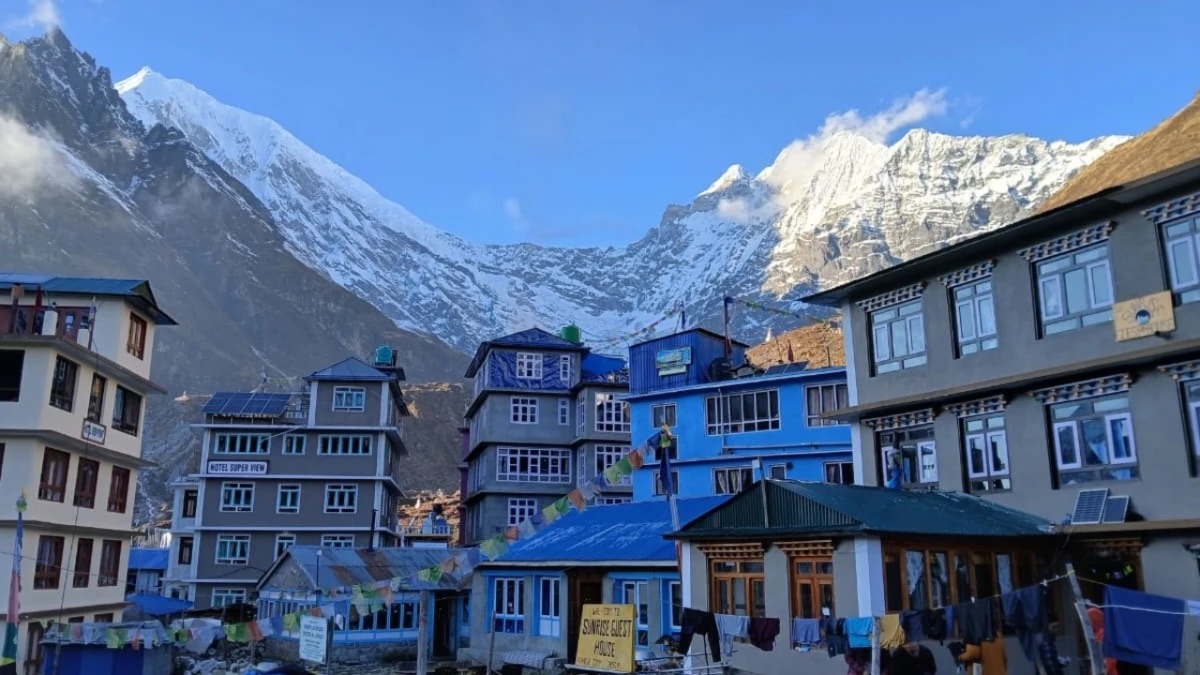
Teahouses are simple, family-run mountain lodges. The rooms are basic, usually featuring two twin beds with foam mattresses, pillows, and blankets. The walls are typically quite thin, so bringing a solid pair of earplugs is a smart move.
The heart of every teahouse is the communal dining room. In the evenings, a central stove fueled by wood or yak dung is lit, making it the coziest spot to warm up, chat with fellow hikers, read, and relax.
Fueling Your Trek
Menus along the route are surprisingly varied—you can find everything from pancakes and eggs to pasta and momos. But the ultimate fuel for any trekker is Dal Bhat (rice, lentil soup, and vegetable curry).
It’s always made fresh, easy on the stomach, and best of all, it comes with free, automatic refills. If you want the most nutritional value for your money, stick to Dal Bhat.
Little Extras to Budget For
As you get higher into the mountains, basic amenities become harder for locals to maintain, so expect small surcharges for:
-
Hot Showers: NPR 300 to 500 ($2.50 – $4.00)
-
Charging Devices: NPR 200 to 400 per item
-
Wi-Fi Access: NPR 300 to 500 per day
Packing Essentials
The trick to packing for Langtang is a smart layering system. You’ll be hiking in a t-shirt in the morning sun and wrapping yourself in a down jacket by evening.
The Gear List:
-
Base Layers: 2–3 moisture-wicking thermal tops and bottoms (merino wool or synthetic). Avoid cotton completely—it holds onto sweat and makes you cold.
-
Insulation: A solid fleece jacket or a lightweight down jacket for hiking on cold mornings.
-
Outer Shell: A windproof and waterproof jacket to protect you from unexpected weather.
-
The Comfort Layer: A heavy, warm down jacket for sitting in unheated teahouses at night.
-
Footwear: Sturdy, ankle-support hiking boots that you’ve thoroughly broken in before arriving in Nepal. Bring comfortable sneakers or sandals for the evenings.
-
The Extras: A warm beanie, a sun hat, gloves, trekking poles (your knees will thank you on the way down), a reliable headlamp, a 20,000 mAh power bank, and a water purification system (like a UV purifier or tablets) so you can avoid buying single-use plastic bottles.

Transportation: Getting There
One of the best perks of Langtang is its easy overland access. You don't have to shell out hundreds of dollars for a domestic flight to a tiny mountain airstrip like Lukla, meaning your trip won't get derailed by bad flying weather.
-
The Local Bus: Costs around $7 to $10 one-way. It leaves early from Kathmandu and is a raw, loud, crowded cultural experience. It's a fun adventure if you're on a tight budget and don't mind a lack of personal space.
-
The Jeep (Recommended): A seat in a shared jeep runs about $20 to $30, while hiring a private jeep costs roughly $150 to $200 total. Jeeps handle the rough mountain roads much better, offer more comfort, and easily shave two hours off the travel time compared to a bus.
Altitude and Safety
Langtang is a very approachable trail, but the mountains always demand respect.
Managing Altitude (AMS)
As you climb past 2,500 meters, the air gets thinner. Mild headaches, slight dizziness, or trouble sleeping are normal early signs that your body is adjusting.
The golden rule is simple: if your symptoms get worse, stop ascending. If they don't improve, head down. Drink 3 to 4 liters of water every day to stay hydrated, walk at a slow, steady pace, and talk to your doctor before the trip about carrying Diamox just in case.
Landslide Zones
There are a couple of marked landslide sections between Lama Hotel and the old Langtang Village. Your guide will point these out clearly. When crossing them, keep your eyes up the slope, don't stop to take photos, and walk quickly and steadily through to the other side.
Cultural Highlights
The Langtang Valley is a deeply spiritual place where the local culture is woven right into the landscape. The lower communities are predominantly Tamang, while the upper valley is home to descendants of Tibetan families who crossed the border generations ago.
-
Mani Walls: You will pass long stone walls beautifully carved with Tibetan Buddhist prayers. Always walk to the left side of these structures out of respect for local traditions.
-
Kyanjin Gompa: The ancient monastery sitting quietly at the top of the valley is well worth a peaceful morning visit.
-
The Cheese Factory: Don't skip the local yak cheese factory. Started in the 1950s with Swiss assistance, it makes amazing cheese from pure nak (female yak) milk. Grab a fresh slice to snack on while watching the yaks graze in the fields outside.
Top Photography Spots
-
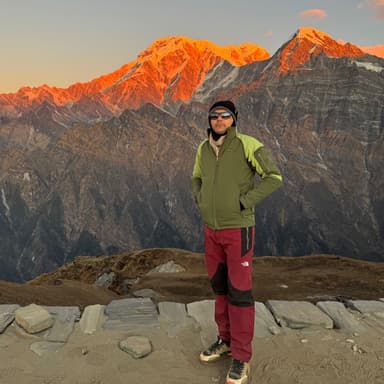
Kyanjin Gompa at Sunrise: Head just outside the village first thing in the morning. The early light hits the peak of Langtang Lirung, turning the massive face of ice a glowing orange while the valley floor is still in shadow.
-
The Summit of Kyanjin Ri: The absolute best spot for a sweeping panorama of the valley floor, framed by a sea of colorful prayer flags dancing in the wind.
FAQs
Q: Do I need real mountaineering experience?
A: Not at all. This is a walking trek on established trails. There is no technical climbing, rope work, or glacier crossing involved on the standard route. If you have decent cardio fitness and are used to walking on hills, you can do this.
Q: Is there cell service or Wi-Fi on the trail?
A: It’s spotty. You will get decent mobile signals in certain sections with local SIM cards (Ncell/NTC), but it often disappears completely in the deeper gorges. Most high-altitude teahouses offer paid satellite Wi-Fi, though it can slow down significantly if the weather turns bad.
Q: Can I find an ATM on the trek?
A: No. There are no ATMs past the main towns near Kathmandu. Make sure to withdraw all the cash you’ll need in Kathmandu to pay for your daily drinks, hot showers, charging, and tips.
Q: Can I leave my extra luggage or suitcase behind during the trek?
A: Yes, easily. Almost every hotel or hostel in Kathmandu will store your non-trekking luggage (like suitcases, clean city clothes, and travel laptops) for free or for a tiny fee ($1–$2 a day) while you are in the mountains. You only want to pack what is absolutely necessary for the 8 days into your trekking duffel or backpack.
Q: What happens if I get seriously injured or suffer from severe AMS?
A: Because Langtang is a deep mountain valley, helicopter evacuation is the primary method for medical emergencies. This is why having comprehensive travel insurance that explicitly covers medical evacuation up to 5,000 meters is mandatory. If you get seriously ill, your licensed guide will coordinate with your insurance agency to call a rescue helicopter from Kathmandu to evacuate you to a hospital.
Q: Are there western-style flush toilets available on the trail?
A: In the lower elevations and some of the newer, premium eco-lodges, you will find standard western-style sit-down flush toilets. However, as you get higher up and further into the wilderness, most teahouses rely on the classic Asian squat toilet. Hot water is a luxury, so toilets are usually flushed manually using a bucket of water placed next to the basin.
Q: Is the food safe, and can vegetarians/vegans survive on this trek?
A: The food is incredibly safe because almost all ingredients are grown locally in the valley without pesticides. In fact, Langtang is an excellent destination for vegetarians and vegans. Because meat has to be carried up the mountain on a porter's back or by mule without refrigeration, eating vegetarian on the trail is highly recommended to avoid stomach bugs. Dal Bhat, vegetable momos, and noodle soups are naturally vegan-friendly—just ask them to skip the yak butter or ghee.
Q: How much should I budget for tipping my guide and porter?
A: Tipping is deeply ingrained in the Nepali trekking culture and is a vital source of income for mountain crews. While it is always at your discretion based on service quality, the general guideline is to tip around 10% to 15% of the total trek cost. For an 8-day trek, a common standard is roughly USD $10 to $15 per day for the guide and $8 to $12 per day for your porter, pooled together if you are traveling in a group.
Conclusion
The Langtang Valley Trek is a brilliant reminder of why we head into the mountains in the first place. It proves that you don't need to book expensive mountain flights or share the trail with massive tour groups to experience the true soul of the Himalayas.
With its warm local hospitality, straightforward overland travel, and massive glacial views, Langtang gives you a raw, authentic look at mountain life in Nepal. Tie up your boots, meet your guide, and get out there—the valley is ready for you.