The Hidden Paradise of Nepal: Ultimate Guide to the Khopra Ridge Trek
The Annapurna region has long been a sanctuary for hikers worldwide. Iconic routes like the Annapurna Circuit and the classic Annapurna Base Camp trek attract thousands of adventurers every season. But let’s be honest—as those trails grow increasingly busy, true wilderness seekers are looking elsewhere for some actual peace and quiet.
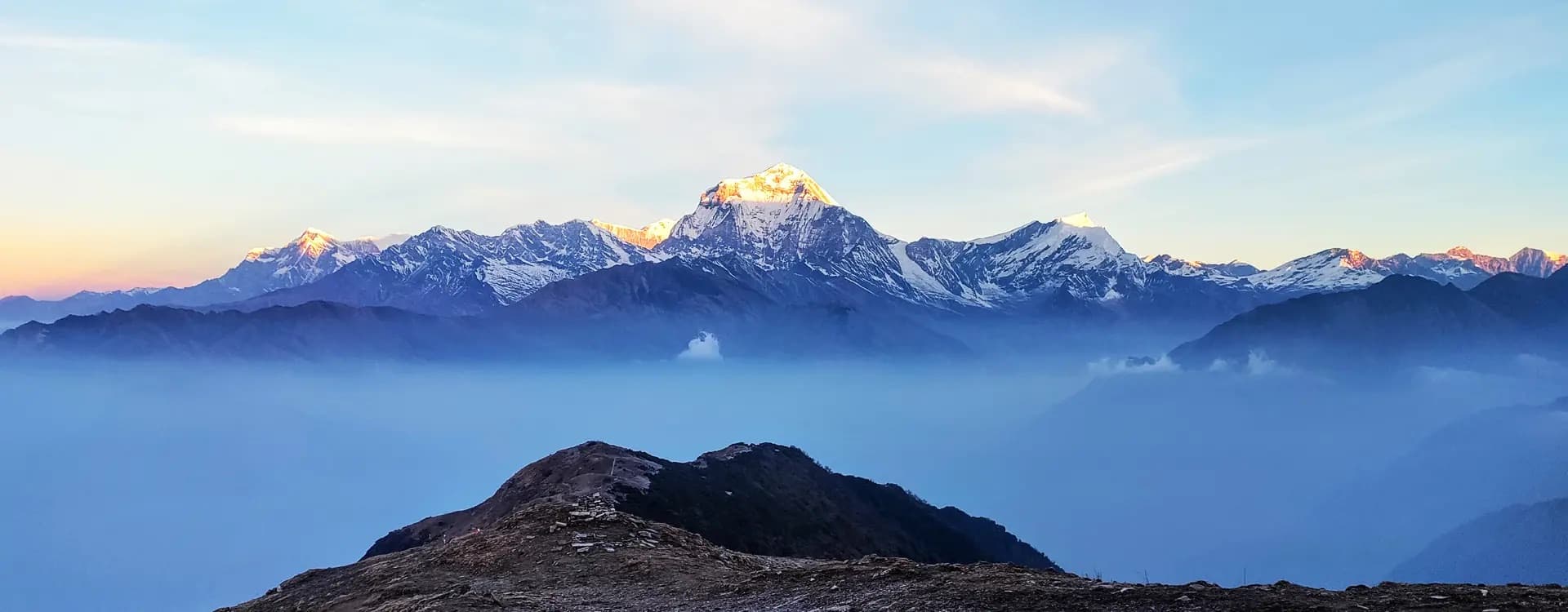
Tucked neatly between the towering massifs of Mt. Dhaulagiri and Mt. Annapurna I, the Khopra Ridge Trek (often called Khopra Danda) remains one of the Himalayas’ best-kept secrets. It’s a pristine, community-focused trail that offers everything you want from an authentic mountain expedition: dense rhododendron woodlands, terraced alpine farmland, sweeping 360-degree vistas, and a challenging side trip to a sacred glacial lake.
Whether you want to escape the crowded stone steps of neighboring paths or you're just looking for a shorter, deeply rewarding high-altitude experience, this guide covers everything you need to know about navigating Nepal’s hidden paradise.
At a Glance: Key Trek Facts
Before you start packing your bags, here is a quick breakdown of what to expect on the Khopra Ridge trail:
-
Total Duration: 7 to 10 Days (from Pokhara to Pokhara)
-
Maximum Altitude: 3,660 meters at Khopra Danda / 4,660 meters at Khayer Lake
-
Difficulty Level: Moderately Challenging (Intermediate)
-
Starting Point: Nayapul or Ghandruk
-
Ending Point: Tatopani or Ulleri
-
Accommodation: Community Teahouses and Eco-lodges
-
Permits Required: ACAP (Annapurna Conservation Area Permit) & TIMS Card
-
Best Seasons: Spring (March–May) and Autumn (September–November)
Why Choose Khopra Ridge Over Traditional Annapurna Treks?
The most common question travelers ask is: What makes Khopra Ridge so special compared to the standard Poon Hill or Annapurna Base Camp routes? The answer comes down to its unique geographic positioning and its incredible community structure.
1. Front-Row Views of Two 8,000-Meter Giants
Most low-to-mid altitude treks in Nepal offer glimpses of major peaks framed by intersecting valleys. Khopra Ridge is a dramatic exception. Because the ridge itself rises high above the deep Kali Gandaki Gorge—the deepest gorge in the world—there is no major terrain blocking your view. To your left, the massive white wall of Mt. Dhaulagiri fills the sky. To your right, Annapurna South, Nilgiri, and Machhapuchhre (Fishtail) stand in full view.
2. The Community Lodge Network
Unlike mainstream routes where teahouses are privately owned profit centers, the Khopra Ridge route relies heavily on community-based tourism. Local villagers constructed and manage many of the lodges here. The money you spend on food and accommodation goes directly into funding rural school projects, health clinics, and trail maintenance in villages like Swanta and Paudwar.
3. Solitude and Serenity
If your goal is to listen to the whisper of pine forests and the crunch of soil beneath your boots rather than the chatter of massive tour groups, this is your trail. You will regularly find sections of the path where yours are the only footsteps—a rare luxury in the modern Annapurna trekking landscape.
Detailed Day-by-Day Itinerary
This itinerary balances daily altitude gain with realistic walking hours to maximize acclimatization while hitting the best viewpoints along the ridge, including Muldai Top.
Day 1: Drive from Pokhara to Ghandruk; Trek to Tadapani
-
Drive Time: 2 to 3 hours
-
Trekking Distance: ~7 km
-
Walking Time: 4 hours
-
Altitude Gain: From 825m to 2,670m
Your journey begins with a scenic morning drive from Pokhara toward the sprawling Gurung settlement of Ghandruk. The road winds alongside the roaring Modi Khola before climbing steep hillside switchbacks.
Stepping out of the vehicle at the upper trailhead, you will instantly feel the cooler, crisp mountain air. The initial trail climbs gently through terraced fields and clusters of stone house farms before entering a thick canopy of oak and rhododendron trees. As you ascend toward Tadapani, look out through the breaks in the trees to spot Machhapuchhre and Annapurna South shifting into view. Tadapani is a major trail junction, providing an ideal, comfortable introduction to local teahouse hospitality.
Day 2: Trek from Tadapani to Dobato
-
Trekking Distance: ~6.5 km
-
Walking Time: 5 to 6 hours
-
Altitude Gain: From 2,670m to 3,426m
Today is where you leave the standard tourist superhighway behind. Shortly after leaving Tadapani, the path forks. While the crowds turn south toward Ghorepani, you will strike northward along a narrow, quiet trail slicing through old-growth forests.
The terrain here is wilder. Tree roots form natural stairs across the rich soil, and long strands of moss hang from overhead branches. Because fewer trekkers pass through this section, it is a prime area for spotting local wildlife, including the colorful Danphe (Himalayan Monal, Nepal’s national bird) and playful Langur monkeys leaping through the canopy. The final hour of the trek opens up into alpine pastures at Dobato, a remote settlement that feels delightfully cut off from the rest of the world.
Day 3: Sunrise at Muldai Top; Trek to Upper Chistibung
-
Trekking Distance: ~9 km
-
Walking Time: 6 hours (including the early morning hike)
-
Altitude Transition: Climb to Muldai (3,637m), descend to Chistibung (2,950m)
Set your alarm well before dawn. A brisk, 45-minute headlamp hike takes you up to Muldai Top (3,637m), a viewpoint many veteran guides argue is vastly superior to the famous Poon Hill.
Muldai Top sits higher, sees a fraction of the tourists, and offers an unobstructed, intimate panoramic view of more than 20 prominent peaks in the Annapurna and Dhaulagiri ranges. Watching the first rays of golden light pierce the summit of Dhaulagiri is an unforgettable Himalayan moment.
After hiking back down to Dobato for a hearty breakfast, pack your gear and begin the journey toward Chistibung. The trail descends through open ridges and clearing pastures, dropping back below the tree line into a peaceful valley before a short, steady climb brings you to the small clearing of Upper Chistibung.
Day 4: Trek from Upper Chistibung to Khopra Ridge (Khopra Danda)
-
Trekking Distance: ~5 km
-
Walking Time: 3 to 4 hours
-
Altitude Gain: From 2,950m to 3,660m
Though today's trek is short in terms of horizontal distance, it features a steady vertical climb. You will slowly leave the upper tree line behind as you make your way past temporary high-altitude herding camps (known locally as Kharkas), where local herders graze livestock during the summer months.
The trail works its way up a steady incline along the spine of the ridge. Keep your pace slow, steady, and deliberate to help your lungs adjust to the thinning air above 3,000 meters. For a deeper look at managing altitude safety during your trip, check out our guide on how to prevent altitude sickness while trekking in Nepal.
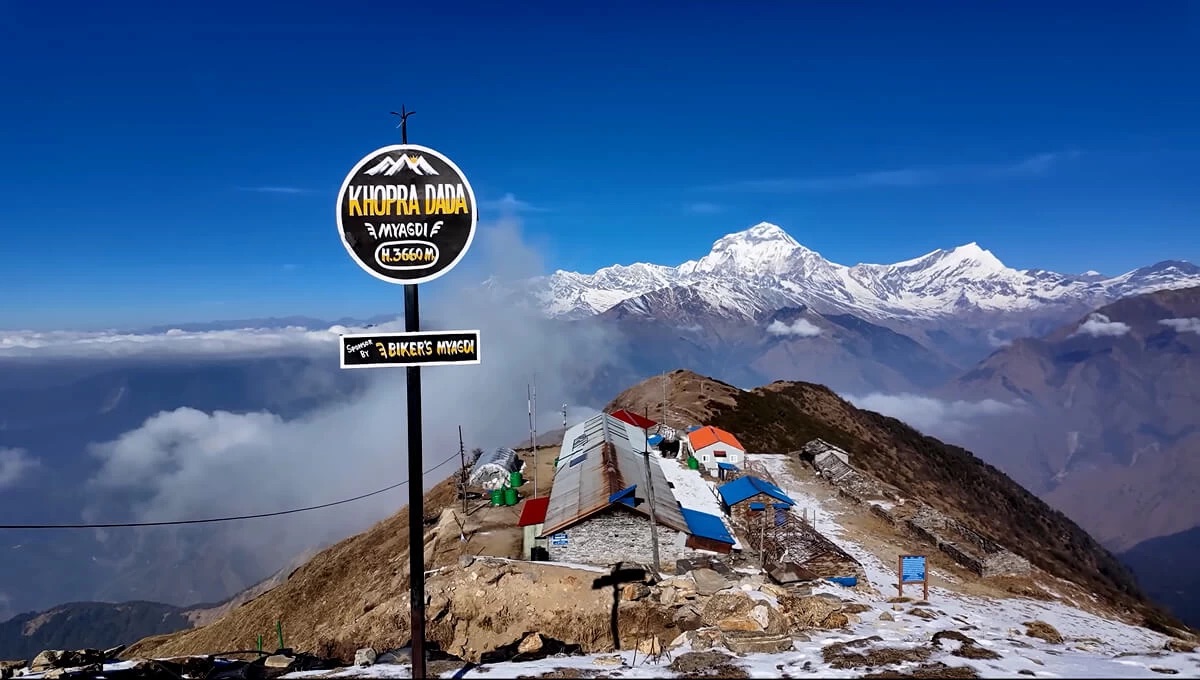
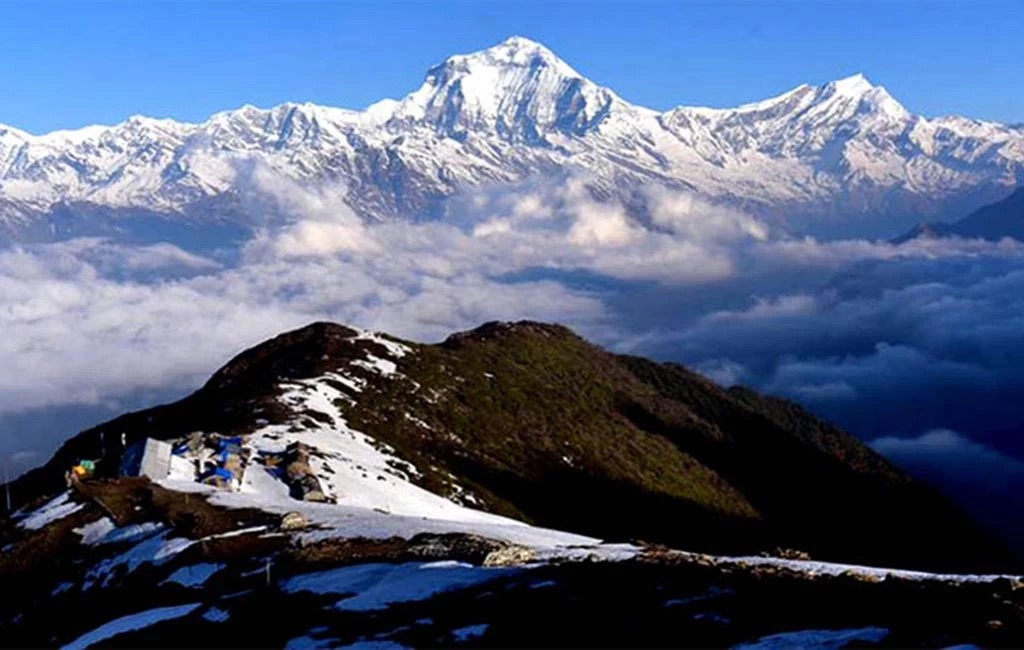
As you top the final switchback, the horizon opens up completely. You have arrived at Khopra Ridge. The community lodge here rests right on the edge of the plateau, presenting sweeping, uninterrupted views across the massive Kali Gandaki valley directly toward the towering wall of Mt. Dhaulagiri.
Day 5: Excursion to Holy Khayer Lake
-
Trekking Distance: ~16 km round-trip
-
Walking Time: 8 to 10 hours
-
Altitude Gain/Loss: From 3,660m to 4,660m, then back down
This is the most physically demanding and spiritually significant day of the entire trek. Khayer Lake is a sacred, high-altitude alpine lake resting directly at the foot of Annapurna South's massive glaciated rock wall. For local Hindus and Buddhists, it is a revered pilgrimage site where devotees travel during the Janai Purnima festival to pray and bathe in the holy waters.
Because there are absolutely no teahouses, shops, or shelter options along this remote path, you must carry a packed lunch, plenty of water filtration options, and dependable windproof layers. The trail follows loose dirt paths and rocky moraine ridges. The thin air makes the going tough, but reaching the quiet, glass-like blue waters of the lake with the icy face of Annapurna South towering directly above you is a powerful, deeply moving experience. Take a moment to enjoy the deep silence before retracing your steps back down to the comfort of the Khopra Ridge lodge.
Day 6: Descend from Khopra Ridge to Swanta Village
-
Trekking Distance: ~10 km
-
Walking Time: 5 hours
-
Altitude Loss: From 3,660m to 2,270m
After enjoying one final, spectacular sunrise over Dhaulagiri from the ridge, begin a long, steady descent back down to warmer elevations. The trail drops steeply through alpine meadows before plunging back into lush bamboo and rhododendron forests.
Your destination today is Swanta, a beautiful, traditional Magar village nestled into the terraced hillsides. The sudden increase in oxygen makes walking feel effortless, and the warmth of the lower altitude is a welcome change. Swanta is famous for its cheese-making initiative; be sure to sample some of the locally produced yak and cow cheese at your lodge while learning about the village's community-driven agriculture projects.
Day 7: Trek from Swanta to Tatopani (Hot Springs); Drive to Pokhara
-
Trekking Distance: ~6 km
-
Walking Time: 3 hours
-
Drive Time: 4 to 5 hours
-
Altitude Loss: From 2,270m to 1,190m (Tatopani)
The final morning of walking takes you down through beautiful farmland and across a suspension bridge over the river before climbing briefly to meet the main road link at Tatopani.
"Tatopani" translates directly to "Hot Water" in Nepali, and the village is named after its natural riverside hot springs. After a week of rugged mountain trails, dropping into the soothing, mineral-rich thermal waters is the ultimate reward for your legs. Once you have relaxed and recovered, a private jeep or local bus will pick you up for the return drive along the rugged canyon highway, bringing you smoothly back to the lakeside hotels of Pokhara by evening.
Route Variations and Trip Planning
One of the best things about the Khopra Ridge trek is how flexible it is. Depending on your timeline and fitness level, you can easily combine it with other classic regional highlights. If you want to check out other incredible trekking opportunities in Nepal before making your choice, browse through our detailed itineraries for Himalayan trekking destinations.
-
The Ghorepani Poon Hill Extension: If you want to see the classic sunrise from Poon Hill, you can easily start your trek from Tikhedhunga and head up to Ghorepani first. From there, instead of looping back down, you head north toward Swanta or Dobato to join the Khopra Ridge trail. This adds about 1 to 2 days to your overall travel time.
-
The Annapurna Base Camp (ABC) Link: Highly conditioned trekkers looking for a longer challenge can choose to complete the Khopra Ridge route first, descend through Ghandruk, and then hook directly into the main Chhomrong trail to push up into the magnificent Annapurna Sanctuary.
Physical Difficulty and Trail Preparation
The Khopra Ridge Trek is classified as a moderate Himalayan trek, but that label requires a bit of nuance. While it does not demand technical climbing skills, crampons, or ropes, it is far from a casual walk in the park.
The primary challenge stems from rapid altitude gain. On Day 4, climbing from Chistibung to Khopra Ridge means gaining over 700 meters of vertical elevation in a single afternoon. To minimize the risk of Acute Mountain Sickness (AMS), you must maintain a slow, deliberate pace—often called the "Himalayan shuffle"—and drink at least 3 to 4 liters of water daily.
To fully enjoy this trek without constant muscle fatigue, start a basic fitness regimen 6 to 8 weeks before your departure date. Focus on steady-state cardio like running, cycling, or swimming to build lung capacity, and incorporate lunges and squats to build leg endurance. The absolute best training is loaded stair climbing or hiking on local trails while wearing the broken-in boots and backpack you intend to use in Nepal.
Packing Essentials Checklist
Because the trail alternates between warm sub-tropical valleys and wind-whipped alpine ridges, layering is your best friend. Space in your pack is limited, so focus on high-quality, lightweight gear.
1. Clothing Layers
-
Base Layer: Moisture-wicking synthetic or merino wool thermal tops and bottoms (avoid cotton, which holds moisture and chills your skin).
-
Mid-Layer: A lightweight fleece jacket or breathable active layer for walking on cool days.
-
Insulating Layer: A high-quality down jacket with a hood (essential for freezing evenings on Khopra Ridge and the pre-dawn hike to Muldai Top).
-
Outer Layer: A breathable, fully waterproof and windproof shell jacket and pants to protect against sudden mountain storms.
2. Footwear & Trail Gear
-
Hiking Boots: Sturdy, ankle-supporting boots with deep tread, thoroughly broken in before your trip to prevent blisters.
-
Socks: 3 to 4 pairs of thick merino wool trekking socks.
-
Trekking Poles: Adjustable poles are highly recommended to significantly reduce impact on your knees during the steep descent to Swanta.
3. Personal Health & Hydration
-
Water Treatment: Purification tablets, a UV purifier, or a squeeze filter. Plastic bottled water is banned or heavily discouraged in many parts of the Annapurna Conservation Area to protect the environment.
-
Medical Kit: Include blister pads (moleskin), ibuprofen, rehydration salts, anti-diarrheal medication, and Diamox (acetazolamide) after consulting your doctor.
Logistics, Permits, and Cost Estimations
To legally hike the Khopra Ridge trail, you need to secure two main permits before leaving Kathmandu or Pokhara:
-
ACAP (Annapurna Conservation Area Permit): This costs roughly 3,000 NPR (approx. $30 USD) per person and funds environmental preservation works across the sanctuary.
-
TIMS Card (Trekker’s Information Management System): This costs approximately 2,000 NPR (approx. $20 USD) and helps local authorities track hikers for safety and emergency response purposes.
Trekking here is remarkably affordable compared to western mountain destinations. A realistic daily budget runs between $30 to $40 USD per day, which comfortably covers a private room in a community teahouse, three warm, fresh meals per day (typically traditional Dal Bhat, porridge, eggs, or pasta), and hot water showers or solar-powered device charging fees where available.
If you choose to hire local support to enrich your experience and ease the physical load, expect to pay around $25 to $30 USD per day for a licensed guide and $20 to $25 USD per day for an experienced porter.
Cultural Etiquette and Environmental Responsibility
When visiting the mountain communities of Nepal, keeping a few key cultural practices in mind helps ensure your interactions are respectful and positive:
-
The Universal Greeting: Always greet locals with a warm "Namaste" spoken with your palms pressed together near your chest.
-
Navigating Sacred Structures: You will frequently encounter Buddhist stone mani walls, prayer flags, and shrines along the paths. Always walk to the left side of these structures in a clockwise direction as a sign of respect.
-
Respectful Photography: The children and elders in villages like Swanta are incredibly photogenic, but always show your camera and ask for permission before snapping a portrait.
-
Responsible Waste Management: The remote nature of the ridge means there is no municipal garbage collection. Pack out all of your personal trash, especially single-use plastics, batteries, and wet wipes, carrying them back down to Pokhara for proper disposal.
Conclusion: The Reward of the Unbeaten Path
The Khopra Ridge Trek proves that you do not need to sign up for a grueling, three-week expedition to experience the deep, uninterrupted majesty of the high Himalayas. By stepping off the main tourist tracks and ascending this remote ridge, you are rewarded with views that rival any viewpoint on earth, all while directly supporting the livelihood of the indigenous communities that call these steep hillsides home.
If you are ready to swap the noise of crowded trails for the rustle of rhododendron leaves, the warmth of open wood stoves, and pristine mountain vistas, Khopra Ridge is waiting for you.
Frequently Asked Questions (FAQs)
Is it safe to trek Khopra Ridge independently without a guide?
While it is technically possible for highly experienced navigators to walk parts of the route solo, hiring a licensed guide or going through a registered local agency is highly recommended. The upper ridge sections can become rapidly disorienting if sudden mountain fog or snow rolls in, obscuring the path. Furthermore, having a guide dramatically enriches your journey by bridging the language barrier with local community hosts.
Will I have access to electricity, hot showers, and Wi-Fi on the ridge?
Yes, but it is limited and unpredictable. Most community lodges rely on solar power. Lower villages like Ghandruk and Swanta usually offer steady Wi-Fi and hot gas showers. However, once you reach high-elevation nodes like Dobato and Khopra Ridge proper, power is saved for lighting. Expect to pay a small fee ($2 to $5 USD) to charge your phone or camera batteries via solar hubs, and expect to rely on cellular data networks (like Ncell or Nepal Telecom) which work surprisingly well on exposed sections of the ridge.
What is the food like at the community lodges?
The food is fresh, filling, and energetic. The definitive staple is Dal Bhat—a nutritious, mountain-fueling platter of steamed rice, lentil soup, spiced vegetable curry, and fresh greens. It is the best option for dinner because it is always fresh and features free refills to replenish calories. You can also find western-influenced options on most lodge menus, including oatmeal, pancakes, eggs, basic pasta dishes, and noodle soups.
Is altitude sickness a major risk on the Khopra Ridge trail?
The risk is lower than on extreme high-altitude treks like Everest Base Camp or the Thorong La Pass, but it should still be taken seriously. Khopra Ridge sits at 3,660m, and the day hike to Khayer Lake pushes you up to 4,660m. Because you return to the ridge to sleep, you are utilizing the classic "climb high, sleep low" acclimatization technique. If you experience persistent headaches, dizziness, or nausea, communicate your symptoms to your guide immediately and prepare to descend to lower elevations.