Finding the Right Crew: How to Choose the Best Trekking Operator in Nepal
Planning a trek in Nepal is one of those things that keeps you up at night in the best way possible. You’re mapping out routes in your head, looking at photos of towering Himalayan peaks, and imagining what it feels like to finally sit in a remote mountain teahouse with a steaming cup of ginger tea after a grueling day on the trail.
But once the initial excitement settles, reality kicks in. You open Google, type in "best trekking operator in Nepal," and suddenly you're hit with a wall of thousands of agencies, all claiming to be the absolute best, the most ethical, and the safest.
Choosing who to trust with your life, your money, and your bucket-list trip is a massive decision. And honestly, looking at the endless options online can feel completely overwhelming.
Lately, making this choice has become even trickier. Nepal’s tourism laws have gone through some major shakeups over the last couple of years. If you’re planning a trip, the old advice from blogs written five years ago just won't cut it anymore. Whether you are aiming for a classic route like the Annapurna Circuit Trekor planning an immersive wilderness journey like the Langtang Gosaikunda Trek, understanding the operational reality on the ground is essential.
Let’s pull back the curtain on how the trekking industry in Kathmandu actually works, break down the latest rules, and look at exactly how to find a reliable, local team that will keep you safe and give you an incredible experience.
1. The Ground Rules: What’s Changed on the Trails
Before we talk about reviews or prices, we need to look at how the legal game has changed for trekking in Nepal. The government and the Nepal Tourism Board have put some strict boundaries in place to manage trail safety and logistics.
The "No Guide, No Trek" Reality
If you were hoping to just rock up to Kathmandu, buy a map, and head into the mountains completely solo, those days are officially over. The government’s "No Guide, No Trek" policy is fully active across all major national parks and conservation areas, including the Everest region, the Annapurna hills, and Langtang National Park.
You legally cannot hike independently as a foreign tourist anymore. You must be accompanied by a government-licensed guide who is officially registered through a licensed Nepalese trekking agency. There are active checkpoints on the trails, and if you try to slip through without an authorized guide, you’ll face heavy fines and get turned around on the spot.
The Solo Restricted Area Rule Change
There’s actually some fantastic news on this front for solo travelers. For years, if you wanted to trek in restricted, culturally protected zones like the stunningly pristine Tsum Valley or Upper Mustang, the government enforced a strict minimum group size of two foreigners. If you were a solo traveler, you had to find a partner online or pay double for a "ghost" permit.
The Department of Immigration updated this policy. Solo travelers can now legally obtain Restricted Area Permits (RAP).
But there’s a big catch you need to know: you still cannot apply for these permits on your own online. You are legally required to book through an authorized Nepalese agency, and you must have a licensed guide with you. Furthermore, the government has established a strict 1:7 guide-to-trekker ratio for these areas. If a group has eight or more people, the agency legally has to send a second licensed guide to ensure everyone is monitored safely at high altitudes.
Digital Tracking with E-TIMS
The old days of carrying a physical paper TIMS card in your pocket are gone. Everything has gone digital through the E-TIMS portal.
When you book with an agency, they have to upload your passport information, your itinerary, and your guide’s specific license data into a centralized system to generate an official digital QR code. You’ll need this code scanned at various trail gateways before you’re allowed onto the track.
What this means for you: Your trekking agency isn't just handling hotel bookings and bags anymore. Legally, they are your official sponsor in Nepal. If they aren't fully registered and compliant with the E-TIMS system, you won't even make it past the first checkpoint.
2. Separating the Real Deals From the Scams
The internet makes it incredibly easy for anyone to build a beautiful website with stock photos of mountains, call themselves a "premier adventure company," and start taking deposits. Some of these are just operators running out of a residential apartment, and others are middlemen who don't actually own a company at all.
To protect yourself and your money, run every agency through this quick vetting checklist:
3. Local Operators vs. Big International Brands vs. Booking Platforms
When you start shopping around for a trip, you’ll generally find yourself looking at three different types of businesses. Knowing how they operate behind the scenes will save you a massive headache—and potentially thousands of dollars.
1. International Adventure Agencies
These are the massive, household-name adventure brands based in the US, UK, Australia, or Europe.
-
The Reality: They have sleek marketing, native English speakers on the phone, and familiar consumer protection laws back home. But here is the open secret: they rarely run the actual treks themselves. They almost always outsource the entire trip logistics to a local Nepalese agency on the ground.
-
The Downside: Because they take a huge cut for marketing and overhead, you end up paying a 30% to 50% premium just to have their logo on your trip confirmation.
2. Third-Party Booking Aggregators
These are the giant online tourism platforms where hundreds of local companies list their itineraries side-by-side.
-
The Reality: They make it very easy to compare prices and scroll through reviews. But these platforms charge the local operators steep commission fees to be listed.
-
The Downside: To survive on these platforms, local agencies are often forced to engage in a race to the bottom, slashing their prices to look competitive. To make a profit, they have to cut corners—usually on food quality, teahouse comfort, and staff wages.
3. Direct, Local Nepalese Operators
These are companies owned, managed, and staffed entirely by locals living and working natively in Kathmandu or Pokhara.
-
The Reality: When you book directly with a solid local operator, 100% of your money stays right inside the Nepalese economy. It directly supports local guides, porters, and mountain communities.
-
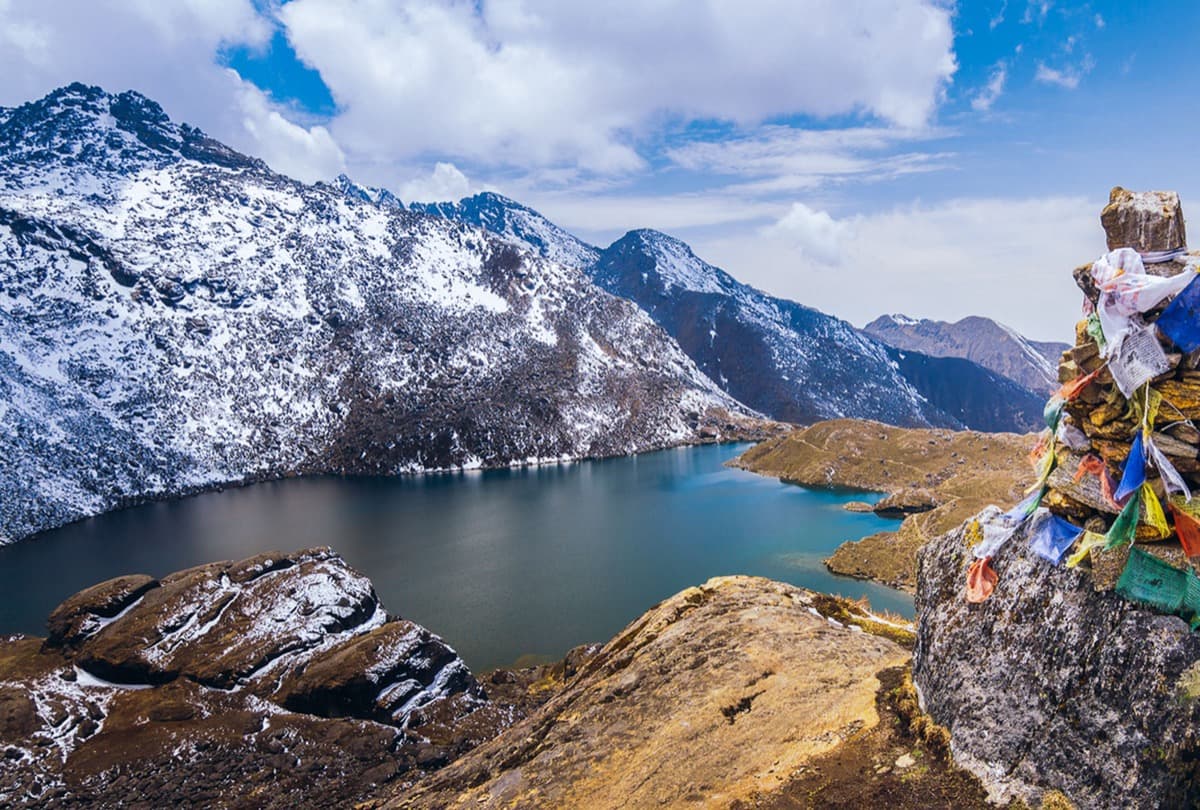
The Upside: You get direct communication with the people actually packing your gear and tracking the weather. You get incredible flexibility to tweak your itinerary—whether you want to add an extra day exploring the high-altitude emerald waters of the
Gokyo Lake Trekor detour towards the panoramic viewpoints of theKhopra Ridge Trek. You get fair, realistic pricing because there are no corporate middlemen taking a cut. You just need to spend a little time doing your homework to make sure you're picking a top-tier crew.
The Breakdown at a Glance
| Factor | Direct Local Operator | Big International Brand | Booking Aggregator Sites |
| Pricing | Fair and direct; excellent value for money | Extremely high due to corporate markups | Looks cheap, but often hits you with hidden fees |
| Flexibility | High; you can easily customize routes in real-time | Rigid; you're locked into fixed group departures | Slow; changes have to go through a platform interface |
| Local Impact | 100% stays in the Nepalese community | 30% to 50% leaks out to overseas corporations | Heavy commission fees leave the country |
| Emergencies | Instant; direct access to local rescue teams | Slower; dependent on international relay chains | Zero; the platform bears no operational liability |
4. The Non-Negotiables: Safety and Altitude Protocols
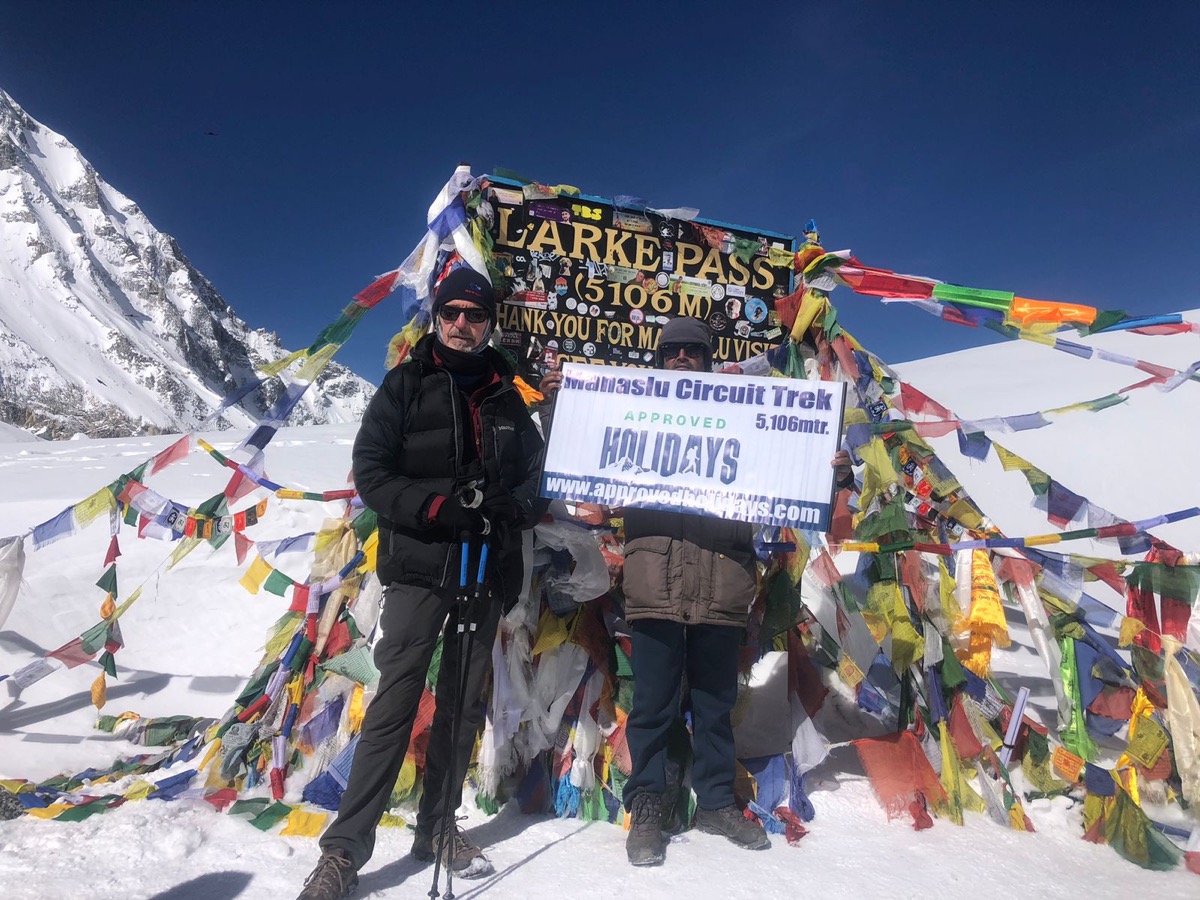
Let's be completely honest: high-altitude trekking has real risks. When you’re pushing past 5,000 meters on a major Himalayan pass, safety isn't just a bullet point on a website banner—it is everything.
When you are talking to potential agencies, don’t be afraid to ask the tough questions about how they handle medical emergencies and altitude. Here is what a responsible operator should be doing:
True Acclimatization Profiles
A good operator will never shorten a trek itinerary just to make it look cheaper or faster to appeal to tourists. Fast ascents are the number one cause of Acute Mountain Sickness (AMS), which can turn dangerous incredibly fast. Look closely at their itineraries. Do they have dedicated acclimatization days built in around critical altitude jumps (like 3,400 meters and 4,300 meters)?
If you want to know exactly what to look for regarding altitude safety, how to spot early symptoms, and how to pace yourself on the trail, take a look at our detailed guide on
How to Prevent Altitude Sickness While Trekking in Nepal.
Daily Health Checks
Your lead guide should be tracking your health every single day. A professional agency equips their guides with pulse oximeters to test your blood oxygen saturation levels and heart rate every morning and night. Keeping a log of these numbers lets the guide see if your body is struggling to adapt to the thin air long before you start feeling sick.
Wilderness Medical Gear
The crew needs to carry a fully stocked medical kit designed for remote wilderness environments. This means having essential high-altitude medications like Diamox (Acetazolamide), Dexamethasone, and Nifedipine on hand. If you are doing a highly strenuous trek that stays above 5,000 meters for days, ask if they carry backup oxygen cylinders or a portable hyperbaric chamber.
Real Helicopter Evacuation Logistics
Before you even step on the trail, a good operator will verify your travel insurance details to make sure your policy covers high-altitude rescue. If someone gets seriously ill, you don't want an agency that has to go through a chain of phone calls to an overseas office. Top local agencies have direct, personal relationships with helicopter charter networks in Kathmandu and can get a chopper launched in minutes if the weather allows.
5. The Hidden Cost of "Cheap" Trekking Packages
It is incredibly tempting to scroll through options, see a package that is hundreds of dollars cheaper than the rest, and click book. But in the Nepalese trekking industry, ultra-budget packages are almost always a trap.
If an agency's price seems shockingly low, they aren't working magic—they are just passing the structural cuts onto things that directly affect your safety, your comfort, or someone else's well-being.
What Should a Fair, All-Inclusive Price Actually Cover?
When you pay a reputable company for a full-board trek, that money should transparently cover:
-
All Necessary Permits: National park entries, conservation fees, E-TIMS registration, and restricted area permits.
-
Domestic Logistics: Internal flights (like the flight to Lukla or Pokhara) and private ground vehicles.
-
Decent Accommodation: Clean, verified teahouses on the trail and standard hotels in town.
-
Full Meals: Three meals a day where you actually get to choose what you want from the teahouse menu, rather than being forced to eat the cheapest item on the board.
-
Fair Staff Wages: Proper daily pay, insurance, clothing, and food for the guides and porters who make the trip possible.
Where Budget Companies Cut Corners
When an agency slashes prices to the bone, you usually find out why when you're already on the mountain.
Suddenly, you realize your package doesn't include the cost of a hot shower, charging your camera, or getting boiled drinking water—which can easily add $15 to $20 a day to your out-of-pocket expenses.
Even worse, budget companies often book the poorest, coldest rooms, hire completely inexperienced guides who don't hold proper certifications, and underpay their porters severely. Paying a fair price ensures everyone on the trip is treated like a human being.
6. Ethics on the Trail: Porter Welfare and Sustainability
Porters are the absolute backbone of the Himalayas. They carry the heavy gear across some of the most punishing terrain on Earth so that travelers can experience the mountains safely.
Unfortunately, porter exploitation is still a real issue in the trekking world, and as a traveler, you have a responsibility to make sure your money isn't funding it.
Checking for Ethical Staff Standards
Ask the operator directly if they follow the guidelines set by the International Porter Protection Group (IPPG). A responsible, ethical agency will openly promise:
-
Strict Weight Limits: Porters should never carry more than 20 kg to 25 kg maximum. Usually, this means one porter splits a 20 kg duffel bag between two trekkers.
-
Real Mountain Gear: Porters need proper footwear, windproof and waterproof layers, and high-altitude sunglasses for snow blind protection—not just cotton clothes and sandals in sub-zero passes.
-
Proper Medical Insurance: Every single guide and porter must be fully covered by medical and emergency rescue insurance paid for by the agency.
-
Dignified Pay and Lodging: They must receive a fair wage that matches the intense physical work they do, along with proper food and a warm place to sleep at night.
Environmental Responsibility
The Himalayan ecosystem is incredibly fragile and under immense pressure from climate change and tourism waste. Look for an operator that takes Leave No Trace (LNT) seriously. They should actively discourage single-use plastic water bottles (encouraging water purification tablets or filters instead), ensure all non-biodegradable trash is packed out of the conservation areas, and coach their groups on how to respect local religious customs, temples, and villages along the way.
7. How to Read Between the Lines of Online Reviews
While a company’s website is always going to make them look flawless, independent reviews give you a taste of what actually happens when things go wrong on a mountain.
When you’re browsing places like Google Reviews, TripAdvisor, or Trustpilot, don't just look at the overall star rating. Look at the details in the text:
-
Are guides mentioned by name? When past clients repeatedly praise a specific guide by name—talking about how they helped them adjust their pace, took care of them when they had a headache, or shared local stories—it’s a massive sign that the agency employs a loyal, high-quality, long-term team.
-
How do they handle chaos? Look for reviews that talk about bad situations. What happened when a flight got canceled due to fog? How did the agency handle it when a trekker got sick and couldn't finish the loop? A company’s true colors show when things go completely off the rails, not when the weather is perfect.
-
Check the dates: Make sure they have a steady stream of consistent, positive reviews from the current season and last year. An agency that was legendary five years ago might have completely changed management or lost its best guides today.
Your Pre-Booking Final Checklist
Before you wire a single dollar or confirm your spot, run your chosen agency through this final gut-check:
-
Are they fully registered with the Ministry of Tourism, NTB, and TAAN?
-
Is their pricing transparent, with a clear list of what's included and what's out-of-pocket?
-
Does the itinerary feature realistic, gradual acclimatization profiles?
-
Do their guides carry pulse oximeters and comprehensive first-aid kits?
-
Did they confirm their guides hold official government licenses?
-
Do they explicitly follow IPPG standards for porter welfare?
-
Were they responsive, clear, and professional when answering your safety questions?
Conclusion
At the end of the day, your choice of a trekking operator shapes your entire experience in Nepal. The Himalayas are majestic, wild, and unpredictable. When you choose an agency that prioritizes legal compliance, medical safety, transparent and fair pricing, and ethical treatment of their crew, you aren't just buying a tour package—you are investing in peace of mind.
Taking the time to do this research might feel tedious upfront, but it’s the most important prep work you'll do for your trip. Once you find a trustworthy, capable local team, you can stop stressing about logistics, step onto the trail with total confidence, and simply soak in the unforgettable magic of the mountains.
Frequently Asked Questions (FAQs)
1. Is it legally possible to trek without a guide in Nepal?
No, independent trekking is completely banned for foreign tourists inside Nepal's national parks and conservation areas. You are legally required to hire a licensed, registered guide through an authorized Nepalese trekking agency to access the trails.
2. Can solo travelers visit restricted areas like Manaslu or Tsum Valley now?
Yes, under the updated rules, the old requirement that forced foreign trekkers to travel in a minimum group size of two for Restricted Area Permits (RAP) has been removed. Solo travelers can now get these permits, but you still cannot apply for them on your own—you must book through a registered local operator and hike with a licensed guide.
3. What is E-TIMS and do I need to get it myself?
E-TIMS is the new digital version of the old paper Trekkers' Information Management System card. It costs around NPR 2,000 (~USD $15). You don't get this yourself; your trekking operator will collect your passport information and guide credentials to register your trip and generate the required digital QR code before you depart.
4. What kind of travel insurance do I need to show my operator?
You must have a specific travel insurance policy that explicitly covers medical care and emergency helicopter evacuation up to at least 6,000 meters. Make sure it doesn't have an altitude cap that excludes high-mountain trekking, as reputable agencies will require a copy of this policy before letting you hit the trail.
5. Why are direct local agencies a better choice than big western brands?
Western brands act as middlemen. They do the heavy marketing in your home country, but then they hire local Nepalese operators to run the actual trek on the ground. By booking directly with a vetted, licensed local operator in Kathmandu, you cut out that extra corporate markup, ensuring your money stays inside the local economy and directly supports the people walking beside you on the trail.