Khopra Ridge Trek: Panoramic Himalayan Views & Authentic Village Life
There’s a moment on the Khopra Ridge that I still replay in my head whenever I need to escape. It’s late afternoon, and the sun is starting to lean toward Dhaulagiri. The ridge is absolutely empty except for our little group. To the left, the entire Dhaulagiri massif—all that ice and rock—catches the light, and to the right, Annapurna South and Machhapuchhre look close enough to touch. Somewhere a long way below, the Kali Gandaki river is carving its invisible canyon. I’m holding a mug of something warm, and the only sound is the wind and the distant crack of a glacier. No phone signal, no selfie crowds, no menu with 75 options. Just the mountains and a bunch of us, limbs tired but heads completely clear.
That’s Khopra Ridge. It’s a trek I keep coming back to, not just because it’s mind-blowingly beautiful, but because it hasn’t been ironed flat by mass tourism. You walk through villages where people still invite you into their kitchens, you sleep in homestays where the blanket smells of woodsmoke, and you end up on a ridge that honestly rivals any Himalayan viewpoint I’ve stood on—including a few of the more famous ones. If you’re weighing this against the [Annapurna Base Camp Trek](#) or the Ghorepani circuit, I’d say Khopra is the quiet, deeply human alternative. It’s for trekkers who want the big peaks but also want to sit with a farmer’s family and learn how to make nak cheese.
This is everything I know about the trail, laid out as if we were chatting over a map in a Pokhara café.
So, What Exactly Is the Khopra Ridge Trek?
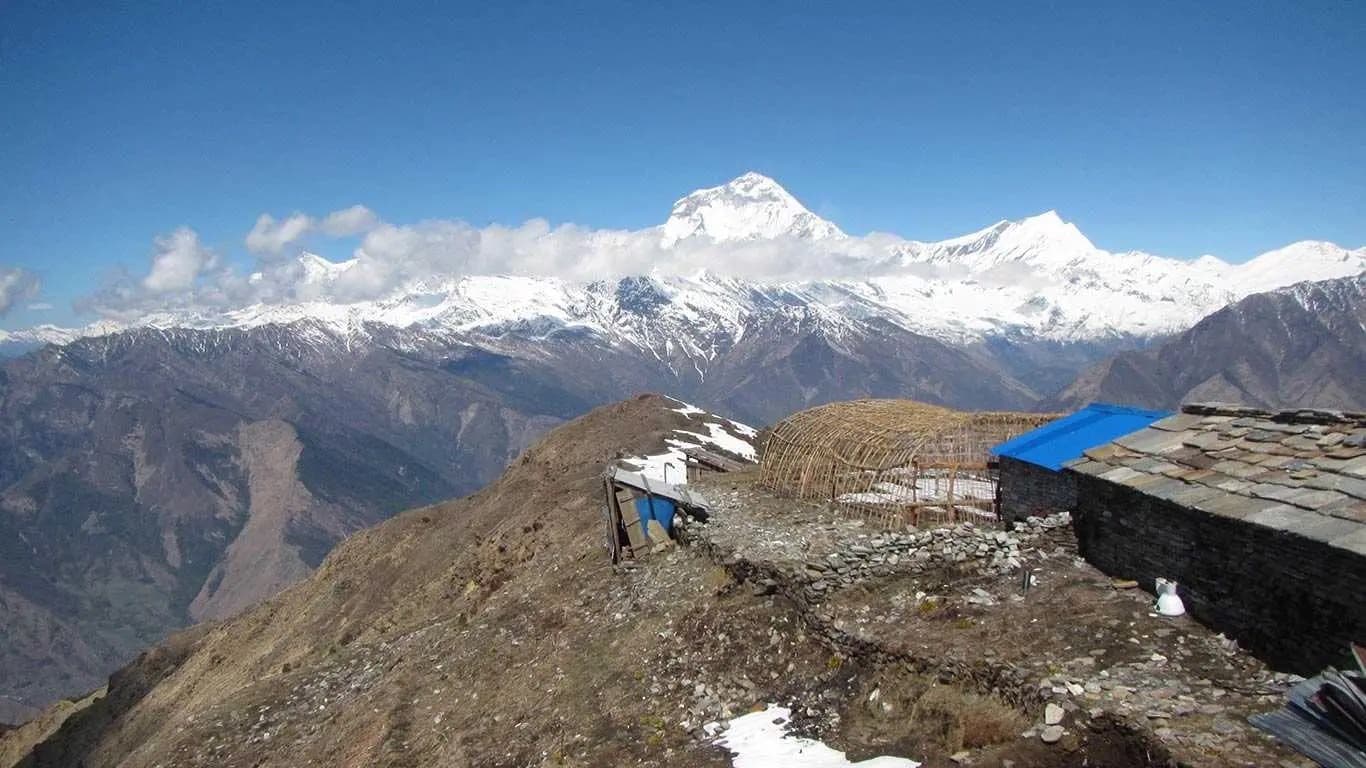
Think of it as a community-developed loop that peels off from the busy Poon Hill trail near Tadapani and climbs to a grassy high ridge at 3,660 meters. From that ridge, you’re looking right across the deepest gorge on earth—the Kali Gandaki—at Dhaulagiri I (8,167 m), Tukuche Peak, and a whole frozen horizon. Turn around and the Annapurna sanctuary glows back at you: Annapurna South, Hiunchuli, and Fishtail. Add an optional day push to Khayer Lake (4,500 m), a sacred turquoise pool that Buddhists and shamans still visit for ritual bathing, and you get a trek that merges high-altitude drama with genuine spiritual undertones.
But the ridge is just half the story. The other half is the village life strung along the trail. Swanta, Bayeli Kharka, Chistibung, and Ghandruk are not backdrops; they’re the main act. You sleep in community homestays, help grind spices if you feel like it, and taste cheese made by a women’s cooperative that started because trekkers like us began passing through. That’s the whole philosophy of this route: tourism money stays in the villages, and in return, you get a window into real Gurung and Magar life that no teahouse strip can provide.
In terms of numbers: you’re looking at 7 to 9 days Pokhara to Pokhara, max altitude around 3,660 m (or 4,500 m with the lake), and a difficulty level that’s a solid moderate. If you’re a fit beginner who can handle 5–7 hours of walking daily and aren’t afraid of a few stone stairs, you’ll do fine. The best windows are spring (late March to May) for rhododendrons and autumn (October–November) for crystal skies. Permits are the standard Annapurna Conservation Area Permit (ACAP) and a TIMS card. And yes, under current regulations, you’ll need a licensed guide, which honestly only makes the experience deeper.
Many trekkers combine Khopra with the classic Ghorepani Poon Hill Trek for a perfect week-and-a-half loop that ticks both the iconic sunrise and the secret ridge. I’ll talk about that later.
The Day-by-Day Journey: From Ghandruk to Khopra Danda and Back
I’ll walk you through a typical itinerary. I’ve done it a few times and this pacing gives you the best acclimatisation and cultural immersion without feeling rushed.
Day 1 – Pokhara to Ghandruk (1,940 m)
The road from Pokhara to Ghandruk is an adventure in itself—bumpy, twisting, and full of glimpses of the Modi Khola valley. Ghandruk is one of those villages that looks straight out of a painter’s dream: slate-paved paths, ochre-washed houses, and the impossibly perfect silhouette of Machhapuchhre hanging above terraced fields. It’s a Gurung stronghold, and the Gurung Museum (housed in an old traditional home) tells stories of Gurkha soldiers, local rituals, and weaving traditions that go back centuries. I love spending the first afternoon just wandering the lanes. Someone’s always spinning wool or drying millet on a roof. It’s a gentle introduction to altitude, too—your body will thank you later.
Day 2 – Ghandruk to Tadapani (2,630 m)
This is a solid climb through oak and rhododendron forest that, come spring, looks like someone spilled buckets of pink and red paint over the hills. Tadapani sits on a ridge, and from here you get your first multi-peak hit: Annapurna South, Hiunchuli, and Fishtail all lined up like a team photo. The lodges are comfortable enough, and the dining hall chatter is usually a mix of trekkers heading to Poon Hill and those, like you, who’ll peel off into the quiet tomorrow.
Day 3 – Tadapani to Bayeli Kharka (3,450 m)
This is the day the crowds vanish. Instead of heading toward Ghorepani, you break left onto a quieter forest path, past old man’s beard lichen dripping off branches, until the trees thin and you emerge into high grazing land. Bayeli Kharka is tiny—just a couple of homestays run by herding families—and the view suddenly opens west to the entire Dhaulagiri range. It hits you like a wave: this massive white wall that’s been hiding behind the valley. I remember sitting outside, watching the moon rise over Dhaulagiri while the family’s yak-cow hybrids ambled home. You’re properly in the mountains now.
Day 4 – Bayeli Kharka to Khopra Danda (3,660 m)
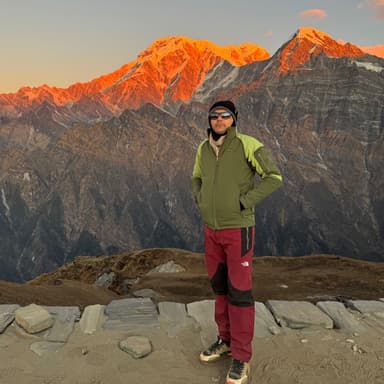
A short, spectacular stage. The trail curves along the hillside, then climbs gently to the ridge. And then—bang—the world just drops away on both sides. There’s a community lodge right on the ridge, simple but welcoming. I usually dump my pack and just walk along the spine, watching the light change on Dhaulagiri’s glaciers. Sunsets up here are a slow-motion fire: apricot to rose to lavender. And because you’re that much higher than the gorge, you actually feel suspended in the middle of the panorama.
Day 5 – Optional Day Hike to Khayer Lake (4,500 m) or Rest
This is the big one if you’re feeling strong. It’s a full day—9 to 10 hours round trip—on exposed trails above 4,000 m. Khayer Lake itself is shockingly blue, tucked under a rocky cirque and fed by snowmelt. For local communities, it’s sacred: plunging into the icy water is said to wash away sins, and during the autumn full moon, shamans still make pilgrimages here. The path also climbs to a viewpoint where you can see right into the forbidden Annapurna Sanctuary from a totally different angle than the ABC approach. That said, altitude is a real thing, and the weather can change fast. If your body or the sky says no, a rest day on Khopra Danda is hardly a loss. I’ve spent whole afternoons up there doing nothing but watching the light move and been utterly content.
Day 6 – Khopra Danda to Swanta (2,270 m)
You’ll drop down through pastures and forest into a landscape of terraces and chortens. Swanta is a gem. This is a Magar village with a community cheese factory that produces delicious nak cheese. The first time I visited, one of the ladies handed me a warm, just-formed wheel and it tasted like the mountains. You can tour the little factory, chat with the cheesemakers, and buy a wedge for your lunch. The homestay here is the real deal: you’ll eat dal bhat in the kitchen while the grandmother stirs the pot and grandchildren do homework next to the fire. In the evening, someone might pour you some tongba (warm millet beer sipped through a bamboo straw) and ask you as many questions about your country as you ask about their village.
Day 7 – Swanta to Ulleri / Nayapul and Drive to Pokhara
The last walking day eases you down through more villages, eventually linking up with the stone staircase that descends to Ulleri. From there, a jeep takes you back to roads, dust, and eventually Pokhara’s lakeside. That hot shower and cold beer will feel profoundly earned.
You can easily extend this into a loop that includes Poon Hill. After Swanta, head to Ghorepani for the famous sunrise, then descend. That combination, along with a side trip to Ghandruk, makes for an 8- to 10-day masterpiece that, to my mind, is one of the most well-rounded treks in the Annapurnas. I’ve detailed the Poon Hill side in a separate Ghorepani Poon Hill Trek guide if you’re considering that combo.
The Views: A Panorama You Won’t Negotiate With
I’ve seen a lot of Himalayan sunrises, but the one from Khopra Danda sticks to me. There’s no jostling for tripod space because there simply aren’t enough people. You walk out of the lodge and the whole arc of Dhaulagiri is just there, glowing. Dhaulagiri I looks like a fortress of ice, and beside it the Tukuche and Dhampus peaks line up. Down in the Kali Gandaki gorge, the deepest cleft on earth is filled with ink-blue shadow. Then you turn east and Annapurna South is lighting up like a lantern, with Hiunchuli’s knife-edge and Machhapuchhre’s iconic fishtail completing the frame. On a clear morning you can even spot Annapurna I peeking from behind.
What makes this viewpoint special is the distance and position. Because you’re set back from the sanctuary wall, you get a more complete spread than Poon Hill—full Dhaulagiri to full Annapurna—and the ridge itself drops off so steeply that you feel suspended. At night, with a full moon rising over Dhaulagiri and stars pressing down, it’s the kind of silence that resets something deep inside you.
Village Life: The Real Heart of the Trek
The big peaks might lure you to Khopra, but the people are what will bring it all vividly to life. Because this trail was developed by local communities rather than outside entrepreneurs, the whole setup feels like you’re being welcomed, not serviced. In Swanta, your host family treats you like a distant cousin who’s finally come to visit. You might sit on the mud floor and help grind spices, or learn to make *sikarni*—a spiced yogurt dessert—while the mother tells you about her son who’s studying in Pokhara. There’s no performance, just real life unfolding.
In Ghandruk, you’ll stumble upon the Gurung museum and realise how deeply the Gurkha tradition runs here. Elderly women in indigo velvet blouses and massive coral beads still follow centuries-old customs. If you’re lucky, you might catch a *rodhi* gathering, where young people sing, dance, and flirt through traditional call-and-response songs.
Bayeli Kharka’s herding families show you a different rhythm, one tied to the seasons and the movement of animals. And the Swanta cheese factory? It was born because trekkers stopped asking for Coke and started asking for local cheese. Now it employs village women and supplies hotels in Pokhara—a perfect, small-scale example of how our presence can nudge positive things into being.
Throughout the trail, you’ll see mani walls, chortens, and juniper incense. The fusion of Tibetan Buddhism and older animist beliefs is alive in the landscape. Your guide, who quite likely grew up in one of these villages, will translate not just language but meaning, turning a simple walk into something that feels like a living museum.
Permits, Seasons, Fitness, and Gear
Permits
You’ll need the Annapurna Conservation Area Permit (ACAP) and a TIMS card. Both are easy to arrange in Pokhara (or Kathmandu) and cost about NPR 3,000 and NPR 2,000 respectively. Carry a couple of passport photos. The same permits cover you if you extend to Poon Hill.
Best Time to Trek
Spring (March–May) for rhododendrons and mild days; autumn (October–November) for the clearest skies and post-monsoon freshness. Winter is doable but cold and the Khayer Lake path may be snow-blocked. Monsoon means leeches, slippery trails, and limited views; I’d skip it unless solitude is your absolute priority.
Fitness and Difficulty
This is a moderate trek. No ropes or technical bits, just plenty of uphill and downhill on stone steps and dirt paths. Daily walking is 4–7 hours. A decent level of cardio fitness and some hill-walking training at home will go a long way. The main challenge is altitude, especially above 3,500 m and on the Khayer Lake day. Acclimatise sensibly, hydrate like it’s your job, and know the symptoms of altitude sickness.
Accommodation and Food
Homestays are simple—foam mattress on a bed frame, pillow, heavy blankets. Bring a three-season sleeping bag for extra warmth and hygiene. Bathrooms are shared and often outside. The food is hearty: dal bhat, fried rice, noodles, momos, and increasingly, local goodies like the Swanta cheese. In homestays, you eat what the family eats, which always tastes better.
Guides and Porters
Hiring a licensed guide is now mandatory for foreign trekkers in this area. Beyond the legal requirement, a good guide transforms the trip—safety, story, secret viewpoints, and all the little cultural connections you’d miss alone. A porter-guide can take up to 20 kg off your shoulders, making the walk far more pleasant and supporting a local family directly.
Why Khopra Ridge, Not Just ABC or Poon Hill?
I love the Annapurna Base Camp for its amphitheatre drama and Poon Hill for its sunrise, but I keep recommending Khopra because it sits in this perfect middle ground. The views are arguably wider and less obstructed than Poon Hill’s, and the trail never gets the circus-like traffic that the classic routes do. Meanwhile, the cultural immersion trounces what you’ll find on ABC’s bustling teahouse highway. You’re staying in someone’s home, not just in a lodge that happens to be in a village. If you’re after a trek that feels both big and personal, this is it.
And remember, you don’t have to choose exclusively—combine them! A loop that links Ghandruk, Tadapani, Khopra Danda, Swanta, and Ghorepani gives you all the greatest hits with plenty of quiet in between. That kind of flexibility is part of what makes the Annapurnas so generous.
Trekking Lightly: Sustainability on Khopra Ridge
Because the trail is community-managed, the money you spend really does stay in the villages—funding scholarships, health posts, biogas units, and trail maintenance. You amplify that positivity by doing small things: carry a reusable water bottle and purify rather than buying plastic, dress modestly, ask before photographing people, pack out all your waste, and eat local instead of imported snacks. For a deeper dive into low-impact trekking, you might like Sustainable Trekking in Nepal. The future of these mountains genuinely depends on trekkers who walk with care.
Frequently Asked Questions
How tough is Khopra Ridge compared to Poon Hill?
It’s a notch above. Poon Hill is shorter and stays lower. Khopra goes higher (3,660 m base, 4,500 m with the lake) and involves more total ascent, but the daily walking distances are similar. If you’re a fit beginner who takes acclimatisation seriously, you’ll manage perfectly.
Do I need a guide?
Yes, it’s now a legal requirement for international trekkers in the Annapurna Conservation Area. And honestly, a good guide makes the trip immeasurably richer—you’ll hear stories you’d never access on your own and walk safer, too.
What permits do I need?
The ACAP and a TIMS card. Both are straightforward to arrange in Pokhara or Kathmandu. If you go through an agency, they’ll handle it.
Is Khayer Lake worth the extra day?
If altitude and weather are on your side, absolutely. The lake’s colour, the sense of pilgrimage, and the view into the Annapurna Sanctuary are unforgettable. That said, Khopra Danda alone already offers a world-class viewpoint, so don’t push yourself dangerously just to tick a box.
What’s the accommodation like, really?
Rustic and real. Simple beds, shared squat toilets, and no heating in the rooms (a sleeping bag is your friend). But it’s also incredibly warm in the non-material sense—the hospitality makes up for any lack of luxury.
When are the rhododendrons blooming?
Late March through April. The forest between Tadapani and Bayeli Kharka turns into something out of a fairy tale.
Can I combine Khopra and Poon Hill?
Yes, and it’s one of my favourite one-week-plus loops. After Khopra and Swanta, head to Ghorepani and descend via Ulleri. You get the best of the hidden trail and the iconic sunrise.
Conclusion: The Ridge That Stays With You
Khopra Ridge isn’t just a trek you complete; it’s a trek that completes something in you. The views of Dhaulagiri and Annapurna are as vast and soul-shaking as any in Nepal, but it’s the quieter moments I carry with me: the kitchen fire in Swanta, the cheese-maker’s smile, the overwhelming silence on the ridge at dawn. This trail proves that the greatest luxury in the Himalayas isn’t a hot shower or an espresso machine—it’s space, genuine welcome, and the feeling that you’ve stepped into a living, breathing place rather than a postcard.
If this sounds like your kind of adventure, have a look at our Nepal Trekking Packages or reach out directly on Approved Holidays. I’d love to help you build an itinerary that includes Khopra Ridge and whatever else your mountain heart desires. The ridge is waiting, and honestly, it feels like it’s been waiting just for you.