Is the “Valley of Glaciers” the Right Challenge for You?
A realistic, experience-based guide to the physical demands, altitude challenges, mental endurance, and preparation required for one of Nepal’s most beautiful yet underestimated Himalayan treks.
The Himalayas have a way of humbling even the most confident traveler. Among their many legendary trails, the Langtang Valley Trek often flies quietly under the radar—overshadowed by famous names like Everest Base Camp and the Annapurna Circuit. Yet those who walk its paths frequently describe it as one of the most emotionally powerful and visually dramatic trekking experiences in Nepal.
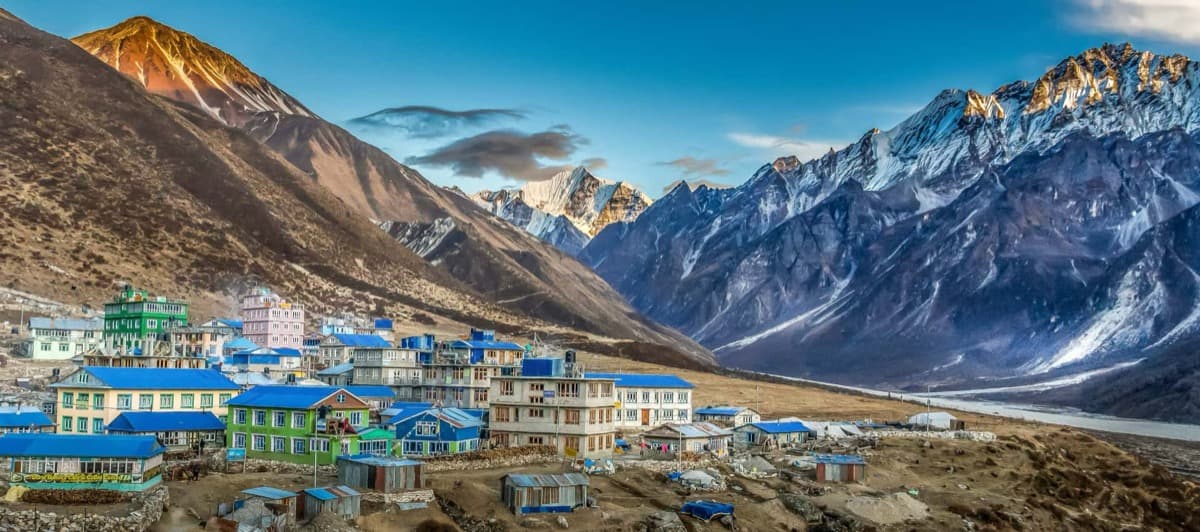
Nestled just north of Kathmandu and bordering Tibet, the Langtang Valley unfolds through dense rhododendron forests, deep river gorges, ancient Tamang villages, and vast alpine landscapes framed by glaciers and 7,000-meter peaks. It is close enough to feel accessible, yet remote enough to feel truly wild.
Because of its proximity to the capital and its relatively shorter duration, Langtang is commonly labeled a “moderate” trek. This description is not wrong—but it is incomplete.
In the context of the Himalayas, moderate does not mean easy. It means something far more nuanced: sustained physical effort, thin air, unpredictable weather, basic living conditions, and the need for mental resilience.
If you are considering the Langtang Valley Trek—perhaps as your first high-altitude trek or as a meaningful journey in 2026—this guide is designed to strip away the myths, manage expectations, and prepare you realistically for what lies ahead.
What Does “Difficulty” Really Mean in the Himalayas?
Before discussing elevations, distances, or training plans, it’s essential to understand how trekking difficulty is defined in Nepal.
Difficulty Is Subjective—But the Mountains Are Not
Trekking difficulty depends heavily on:
-
Your fitness level
-
Your trekking experience
-
Your comfort with discomfort
-
Your mental resilience
A route that feels manageable to a seasoned hiker can feel overwhelming to someone unaccustomed to long days of walking or carrying a backpack. At the same time, the mountains themselves are impartial. They do not adjust to your expectations.
In Nepal, trekking routes are often classified as easy, moderate, or strenuous. These labels assume:
-
Basic fitness
-
Some tolerance for altitude
-
Willingness to walk several hours daily
They do not assume luxury, comfort, or flat trails.
Understanding the “Moderate” Label for Langtang
When guidebooks or trekking companies describe Langtang as a moderate trek, they usually mean:
1. No Technical Mountaineering Required
You won’t need ropes, crampons, ice axes, or climbing skills. The trail is walkable throughout, even though it can be steep and uneven.
2. Lower Altitude Compared to Iconic Treks
Langtang’s highest sleeping point is below 4,000 meters, which reduces—but does not eliminate—the risk of altitude sickness.
3. Shorter Overall Duration
Most itineraries range from 7 to 10 days of trekking, making it more accessible for travelers with limited vacation time.
However, moderate does not mean relaxed. You will still:
-
Walk 5–8 hours per day
-
Climb thousands of stone steps
-
Experience oxygen levels significantly lower than sea level
-
Sleep in cold, basic teahouses
Who Is the Langtang Valley Trek Best For?
The Langtang Valley Trek is particularly well suited for:
Fit First-Time Himalayan Trekkers
If you exercise regularly—running, cycling, hiking, gym training—and prepare properly, Langtang is an excellent introduction to high-altitude trekking.
Travelers Short on Time
Those seeking a genuine Himalayan experience without committing to a three-week expedition will find Langtang ideal.
Culture-Focused and Reflective Trekkers
Langtang offers deep immersion into Tamang culture, Tibetan Buddhism, and post-earthquake resilience—making it emotionally richer than many busier routes.
Repeat Trekkers Seeking Solitude
Compared to Everest or Annapurna, Langtang remains quieter and more intimate.
The Physical Reality of the Langtang Valley Trek
To understand how difficult the Langtang Valley Trek truly is, we need to break it down into four core components:
-
Terrain
-
Daily duration
-
Altitude
-
Weather and environmental conditions
1. Terrain: The Truth Behind “Nepali Flat”
One of the first phrases you’ll hear from local guides is “Nepali flat.” This phrase, delivered with a smile, means constant ups and downs.
In reality, Langtang offers very little flat walking.
Lower Section: Syabrubesi to Lama Hotel
This portion of the trek is a cardiovascular workout.
-
Steep ascents and descents through dense forest
-
Endless stone staircases carved into hillsides
-
Damp, mossy trails and exposed roots
-
Humid conditions, especially in spring and monsoon
Your legs—particularly your calves and quads—will feel the strain early. Many trekkers underestimate this section because of the relatively low altitude, but physically, it is one of the most demanding parts of the trek.
Upper Section: Lama Hotel to Kyanjin Gompa
As you climb higher:
-
The forest thins
-
The valley widens
-
The terrain becomes rocky, dry, and exposed
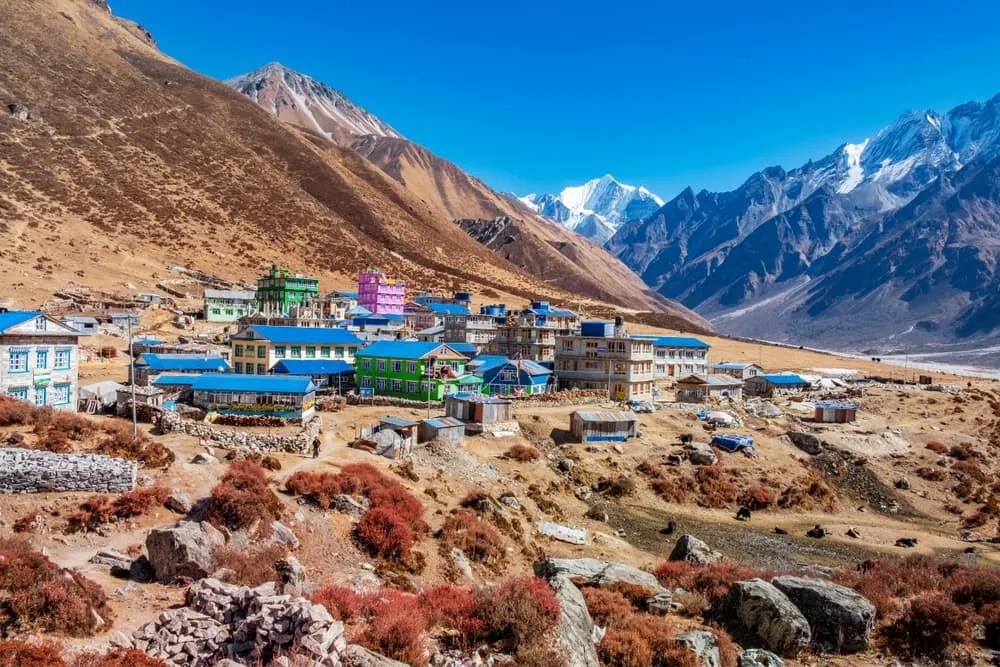
Walking through the massive landslide zone near the former Langtang village—destroyed during the 2015 earthquake—is both emotionally moving and physically challenging. The ground here is uneven, dusty, and mentally draining.
Sun exposure and wind become factors, increasing fatigue.
2. Daily Walking Time: Hours Matter More Than Distance
In the Himalayas, distance is misleading.
A day that looks short on a map—8 to 10 kilometers—can take 6 to 7 hours due to elevation gain, terrain, and altitude.
Expect:
-
An average of 6 hours of walking per day
-
Some days reaching 7–8 hours
-
Limited opportunities for full muscle recovery overnight
This cumulative fatigue is often what surprises trekkers the most.
3. Altitude: The Invisible Challenge
Altitude is the single most unpredictable factor of difficulty.
Key Elevations on the Langtang Trek
-
Syabrubesi: 1,550 m
-
Lama Hotel: ~2,470 m
-
Langtang Village: ~3,430 m
-
Kyanjin Gompa: 3,870 m
Optional acclimatization hikes:
-
Kyanjin Ri: 4,773 m
-
Tserko Ri: 4,984 m
Above 3,000 meters, oxygen levels drop significantly. Even strong hikers will feel:
-
Shortness of breath
-
Slower walking pace
-
Increased fatigue
Acute Mountain Sickness (AMS) is possible at Kyanjin Gompa, especially if you ascend too quickly or ignore hydration and pacing.
The optional climbs above Kyanjin Gompa are steep, relentless, and physically demanding, often becoming the hardest day of the entire trek.
4. Weather and Seasonal Difficulty
The Langtang Valley Trek changes character dramatically depending on the season.
Autumn (Oct–Nov)
Clear skies, stable weather, cold mornings, ideal conditions. This is when difficulty feels most manageable.
Spring (Mar–Apr)
Warmer temperatures, blooming rhododendrons, occasional afternoon clouds.
Winter (Dec–Feb)
Heavy snow, freezing temperatures, limited facilities. Only suitable for experienced trekkers.
Monsoon (Jun–Aug)
Mud, leeches, landslides, poor visibility. Physically and mentally exhausting.
Mental and Lifestyle Challenges on the Trail
Trekking difficulty isn’t only about muscles and lungs.
The Reality of Teahouse Living
Langtang teahouses are welcoming but basic.
-
Cold bedrooms without heating
-
Limited electricity and charging
-
Simple toilets, often squat-style
-
Hot showers may cost extra—or not exist
Comfort is minimal, especially at higher altitudes.
Food Fatigue and Routine
Meals are repetitive but nourishing:
-
Dal Bhat
-
Rice and lentils
-
Noodles
-
Potatoes
While excellent fuel, the lack of variety can become mentally tiring over a week.
The Mental Challenge of Consecutive Long Days
Many trekkers find the hardest moments come early in the morning:
-
Cold temperatures
-
Sore muscles
-
The knowledge of another long uphill day
Mental resilience—your ability to stay positive, patient, and motivated—is a major factor in how “difficult” the trek feels.
How to Prepare for the Langtang Valley Trek
The Langtang Valley Trek is achievable for most healthy people—but only with preparation.
Start Training 8–12 Weeks Before Your Trek
Your training should focus on:
-
Cardiovascular endurance
-
Leg strength and stamina
-
Core stability
1. Train the Way You’ll Trek
Hiking with a backpack is the single most effective preparation.
-
Break in boots early (minimum 50 km)
-
Train with 4–12 kg depending on porter support
-
Practice walking uphill and downhill
2. Sample Training Progression
Weeks 1–4: Base Phase
-
2 moderate cardio sessions (45 minutes)
-
1 strength session
-
1 short hike (2–3 hours)
Weeks 5–8: Build Phase
-
Longer cardio with intervals
-
Heavier strength work
-
4–6 hour weekend hikes
Weeks 9–11: Peak Phase
-
Back-to-back long hikes
-
Stair climbing or hill repeats
Week 12: Taper
-
Light activity and recovery
3. Strengthen Core and Stabilizers
Uneven terrain demands:
-
Strong ankles
-
Stable knees
-
Engaged core
Planks, lunges, balance drills, and step-ups are essential.
Managing Difficulty on the Trail
Walk Bistari, Bistari (Slowly, Slowly)
Overexertion early is the most common mistake. A steady, conversational pace is the safest and most efficient approach.
Hydration and Nutrition
Drink 3–4 liters of water daily and eat consistently, even when appetite drops.
Consider Hiring a Porter
Reducing pack weight dramatically improves endurance and enjoyment while supporting local livelihoods.
Listen to Your Body
Never ignore:
-
Persistent headaches
-
Nausea
-
Dizziness
These are signals—not weaknesses.
Frequently Asked Questions (FAQs)
Is the Langtang Trek suitable for beginners? Yes. It is one of the most beginner-friendly treks in Nepal because the altitude gain is more gradual than other routes. However, "beginner" doesn't mean "unfit"—you should still be able to walk 10–12km on hilly terrain comfortably.
How does it compare to Everest Base Camp (EBC)? Langtang is generally shorter and reaches a lower maximum altitude (unless you climb Tserko Ri). It is less technical and less crowded, making it a "softer" introduction to high-altitude trekking.
What are the signs of Altitude Sickness (AMS) to watch for? The most common early signs are persistent headaches, loss of appetite, nausea, and difficulty sleeping. If symptoms worsen, the only "cure" is to descend to a lower elevation immediately.
Do I need a guide for this trek? While experienced trekkers used to go solo, as of 2023, the Nepal government requires most trekkers to have a licensed guide in national parks. A guide is highly recommended for navigating post-earthquake trail shifts and handling medical emergencies.
Conclusion: Respect the Mountains, Enjoy the Journey
The Langtang Valley Trek is not easy—but it is deeply rewarding.
Its difficulty is the gateway to:
-
Towering glaciers
-
Quiet monasteries
-
Resilient mountain communities
-
Profound Himalayan silence
With proper preparation, patience, and respect for altitude, Langtang becomes not just a trek—but a transformative experience.
Prepare well. Walk slowly. And let the Valley of Glaciers leave its mark.