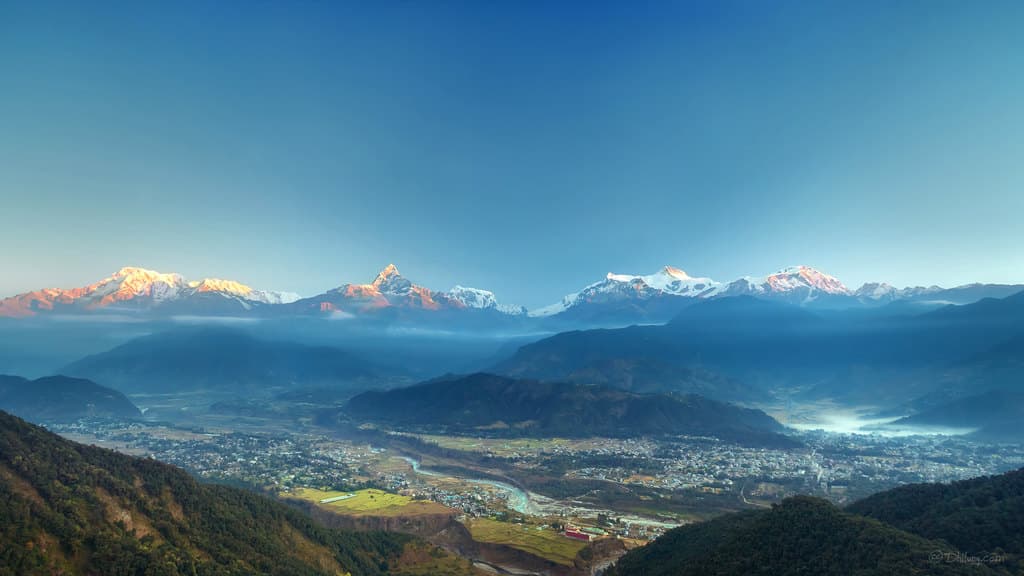
Top 10 Highlights of the Nepal Golden Triangle Tour
A journey through ancient temples, misty hill towns, Himalayan lakesides, and wild jungle — Nepal's Golden Triangle is the trip that changes everything.
There is a particular kind of travel that does not just show you new places — it rewires the way you see the world. Nepal Golden Triangle Tour is exactly that kind of journey. Connecting the sacred streets of Kathmandu, the perfectly preserved hill town of Bandipur, the lakeside paradise of Pokhara, and the wildlife-rich jungles of Chitwan, this route packs more wonder into a single trip than most people experience in a lifetime.
What makes it so special is the sheer variety. One morning you are standing before a 2,000-year-old stupa as butter lamps flicker in the half-dark. A day later, you are breathing cool mountain air in a hilltop village that feels like it has barely changed in a century. Then suddenly you are out on a glassy lake watching the Annapurna range turn rose gold at sunrise — and before the week is over, you are deep in a jungle listening to the distant crash of a one-horned rhinoceros moving through the tall grass.
Nepal does not do things by halves. And neither does this tour.
Here are the top 10 highlights — drawn from the real, unmissable moments that make the Nepal Golden Triangle the country's most beloved travel route.
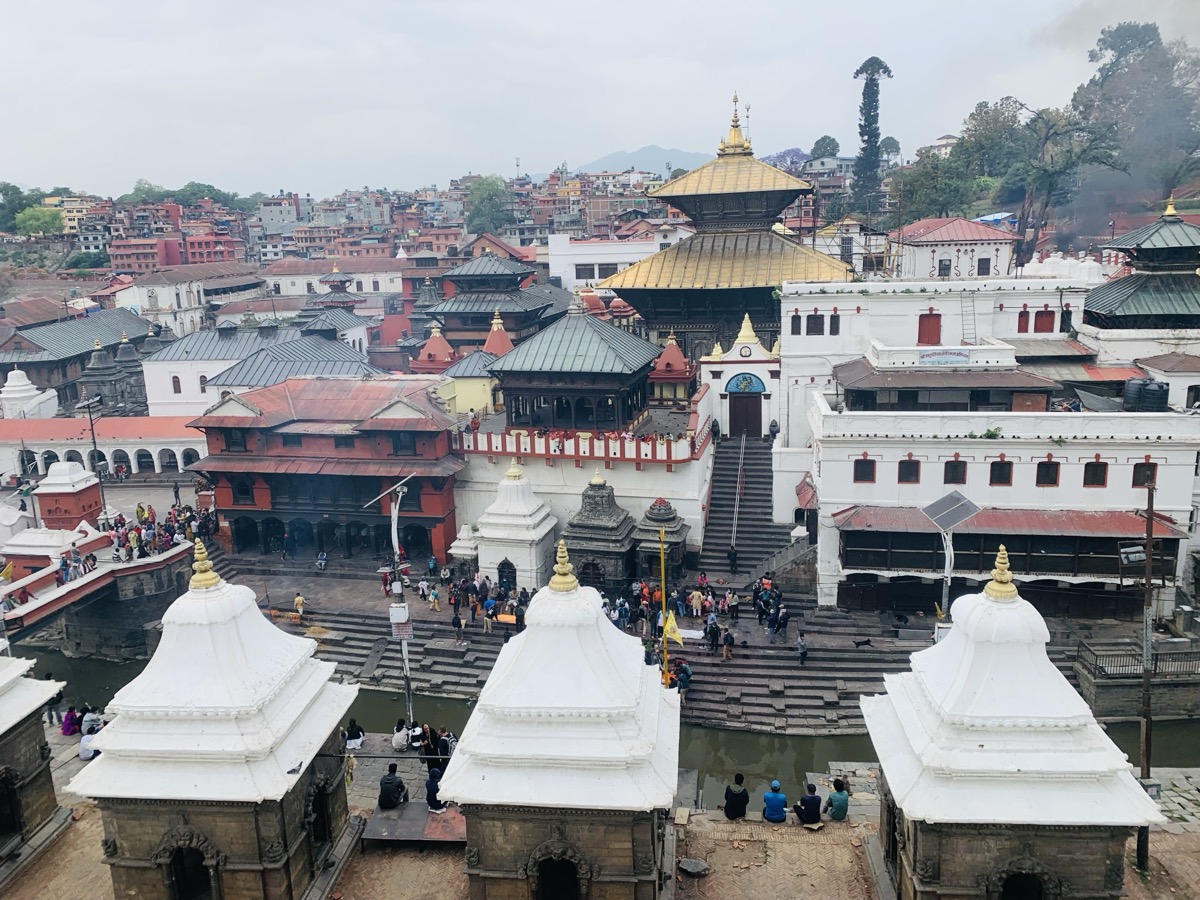
1. Pashupatinath Temple — Where Life Meets the Sacred
Most travellers arrive in Kathmandu with their senses already overwhelmed — the honking traffic, the incense smoke threading through narrow bazaars, the sudden appearance of ancient temples between modern shops. But nothing quite prepares you for your first visit to Pashupatinath.
Sitting on the banks of the sacred Bagmati River, Pashupatinath is the holiest Hindu temple in Nepal and one of the most significant Shiva shrines in the entire world. The main pagoda — its roof layered in hammered gold, its carved wooden struts worn smooth by centuries of devotion — is reserved for Hindus only. But the area that surrounds it is open to all, and it is here that the real experience unfolds.
Along the cremation ghats, families gather to perform the last rites for their loved ones. Smoke rises from the stone platforms. Priests chant in Sanskrit. The Bagmati carries marigold petals downstream. It is raw, solemn, and unexpectedly moving — a reminder that in Nepal, the sacred is woven right through the everyday, not kept behind barriers or admission counters.
Wander the far bank and you will find sadhus — Hindu holy men — sitting in meditation, draped in saffron, their faces marked with ash and vermilion. Many are genuinely ascetic; others enjoy posing for photographs. Either way, they are among the most striking human portraits you will encounter on this entire journey.
Visit in the late afternoon if you can. The golden light, the chanting that swells from inside the temple walls, and the slow procession of pilgrims crossing the footbridge create a scene of extraordinary beauty and gravity. Pashupatinath sets the spiritual tone for everything that follows — including the Buddhist serenity of Boudhanath, just a short drive away.
2. Boudhanath Stupa — Walking with the Pilgrims
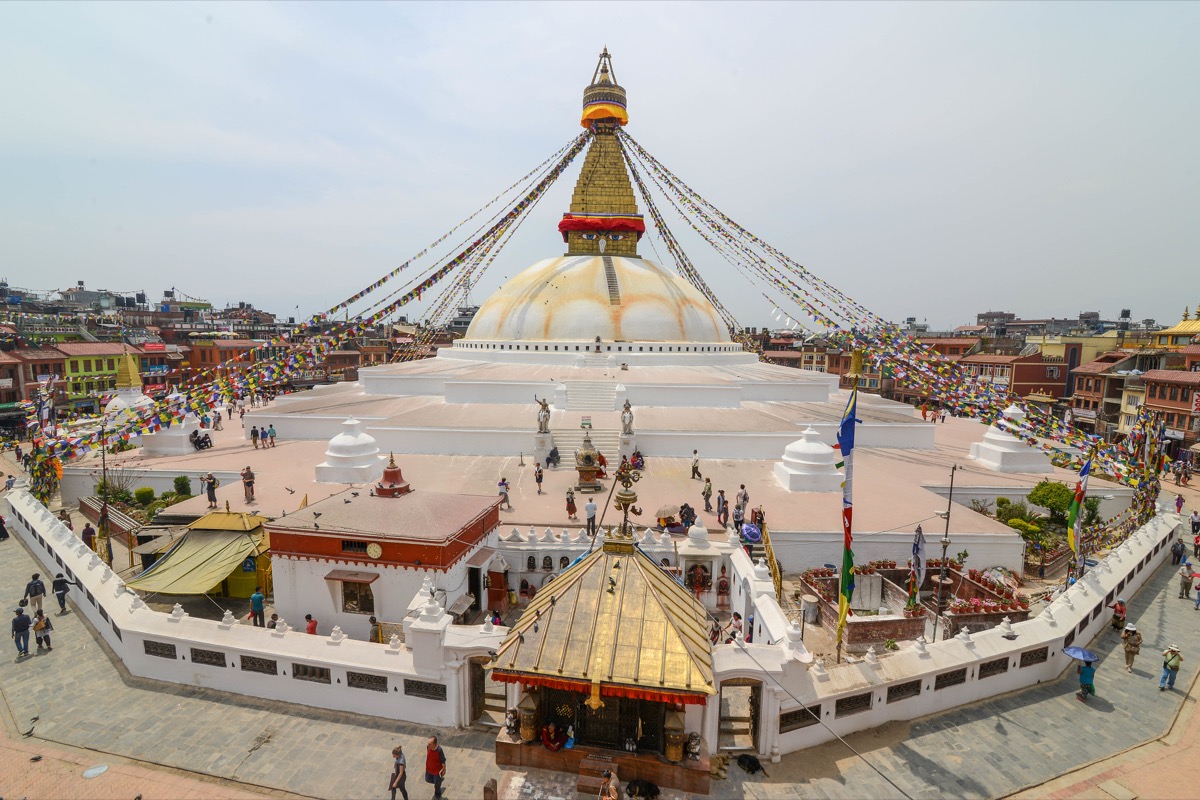
Drive eastward from Pashupatinath for fifteen minutes and the cityscape suddenly opens around an enormous white dome. Boudhanath Stupa announces itself before you even see it properly — you hear the low hum of prayer wheels spinning, smell the sweet smoke of incense, and notice the flutter of thousands of prayer flags strung from the golden spire above.
One of the largest Buddhist stupas in the world, Boudhanath is the spiritual heart of Tibetan Buddhism outside of Tibet. Its origins go back well over a thousand years, though it became especially significant after 1959, when Tibetan refugees fleeing the Chinese occupation found sanctuary in Kathmandu and gathered around this ancient monument. Today, more than 50 monasteries ring the stupa, and the neighbourhood is alive with the sounds and rhythms of Tibetan monastic life.
The thing that gets you at Boudhanath is not any single element but the whole living atmosphere of the place. Join the clockwise stream of pilgrims walking the circular path around the base — locals in traditional dress, elderly women spinning brass prayer wheels, young monks in burgundy robes checking their phones — and you feel immediately absorbed into something much larger than yourself.
Come back at dusk. As the sun drops behind the Kathmandu hills, butter lamps are lit around the base of the stupa, monks begin their evening prayers in the surrounding monasteries, and the entire dome seems to glow from within. Sit on a rooftop café with a bowl of thukpa (noodle soup) and let it wash over you.
The quiet introspection Boudhanath invites is a beautiful complement to both Pashupatinath's intensity and the ancient hilltop energy of Swoyambhunath.
3. Swoyambhunath — The Eyes That Watch Over Kathmandu
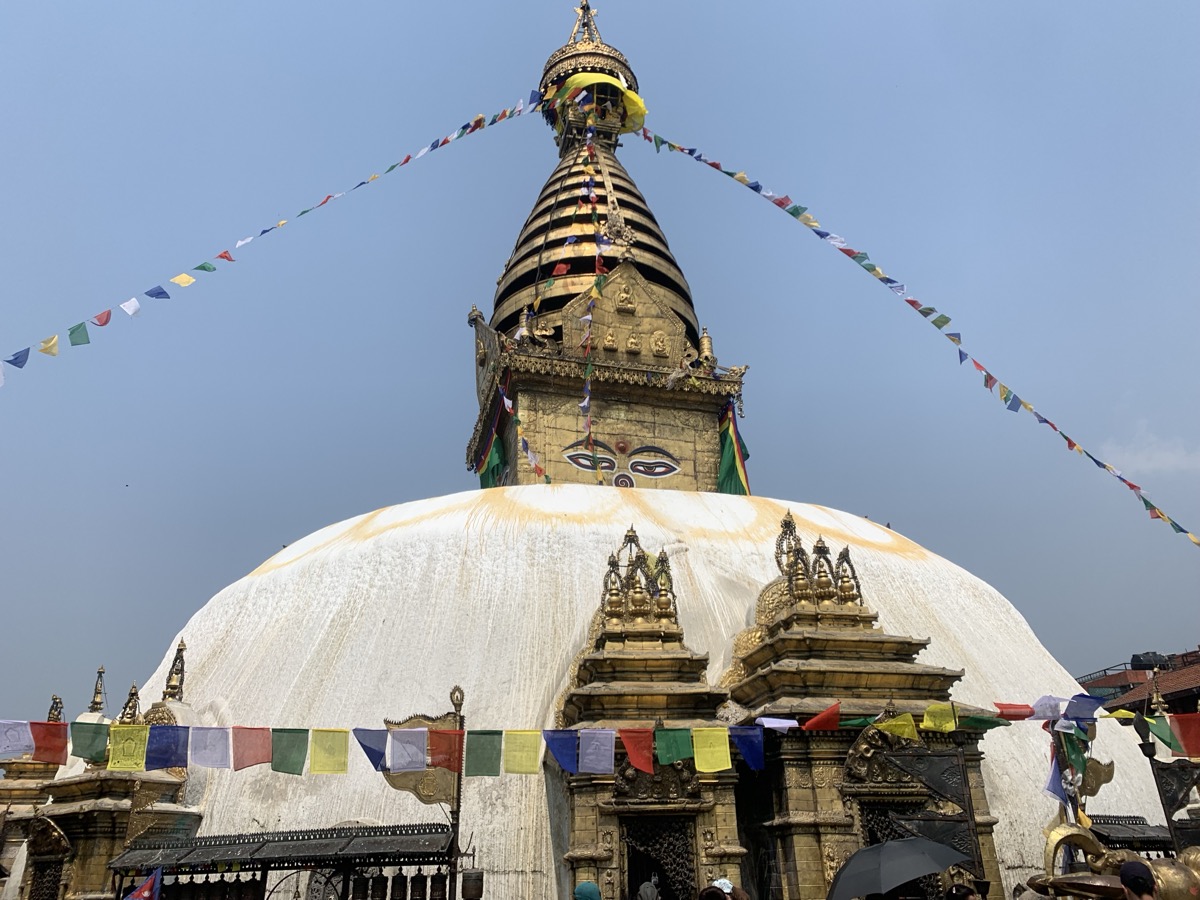
On a forested hill rising above the western edge of Kathmandu, Swoyambhunath has been watching over the valley for more than two thousand years. Its whitewashed dome, golden spire, and painted all-seeing eyes of the Buddha are perhaps the single most recognisable image in all of Nepal.
The climb up the 365 stone steps — flanked by prayer wheels, stone sculptures, and the famously mischievous rhesus macaques who give the temple its popular nickname, the Monkey Temple — is part of the experience. By the time you reach the top, a little breathless, the view of Kathmandu Valley spread out below makes the effort feel entirely worthwhile.
What makes Swoyambhunath particularly fascinating is its role as a shared sacred space. Hindus and Buddhists both worship here, side by side, in an arrangement that has persisted for centuries. Small shrines to Hindu deities sit comfortably beside Buddhist votives and thangka paintings. It is a physical expression of the religious coexistence that defines Nepal's cultural identity.
The stupa is believed to be self-arisen — swoyambhu literally means "self-existing" — and legend says it emerged as a lotus from a great lake that once filled the Kathmandu Valley. Whether you read that as myth or metaphor, there is undeniably something about this hilltop that feels ancient and elemental, a sensation heightened by the chanting that drifts from the monastery below.
Swoyambhunath works beautifully as a morning visit before heading to Patan Durbar Square in the afternoon.
4. Patan Durbar Square — The City of Fine Arts
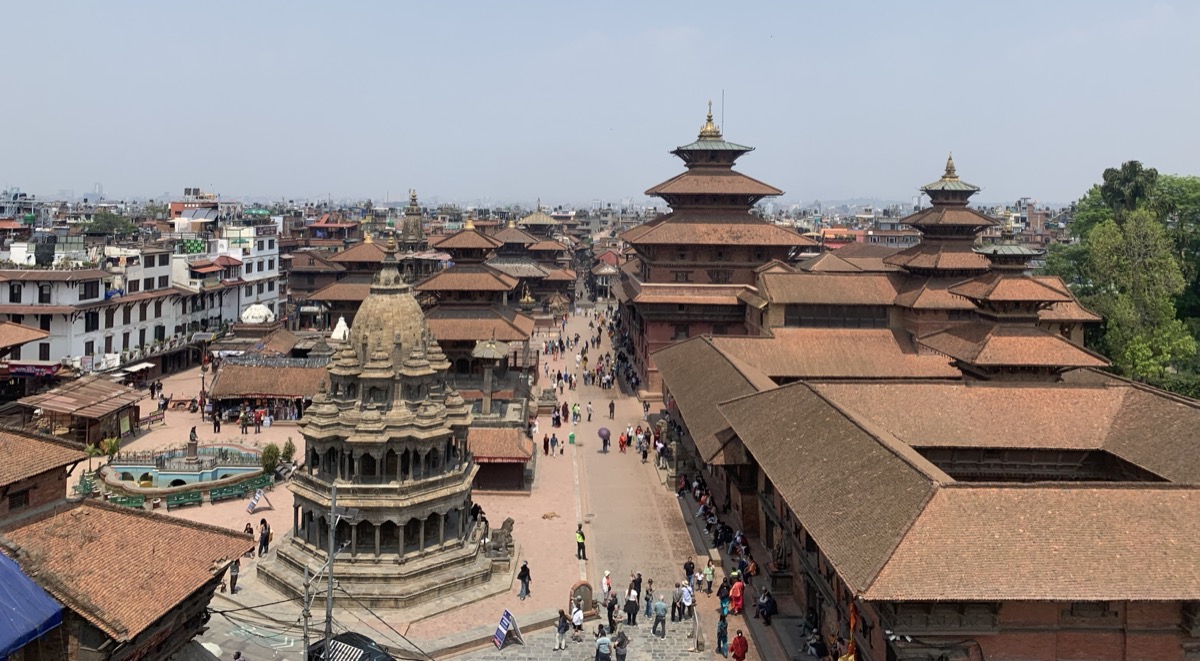
Just across the Bagmati River from Kathmandu lies Patan — older, quieter, and widely regarded as the most beautiful of the three ancient royal cities in the valley. And its Durbar Square, the old palace plaza at its heart, is a masterwork of Newari craftsmanship that genuinely takes your breath away.
Unlike the busier Kathmandu Durbar Square, Patan's plaza has a contemplative quality. The stone-paved courtyard is ringed by temples of exquisite detail — the Krishna Mandir, built entirely in stone in the shikhara style of Indian temple architecture; the Hiranya Varna Mahavihara (Golden Temple), its courtyard buried in intricate metalwork; and the Royal Palace, now home to the Patan Museum, considered the finest museum in Nepal for understanding the art and religion of the Kathmandu Valley.
Patan is traditionally a city of craftsmen. The Newari artisans here have been producing metalwork, woodcarving, and stone sculpture for over a thousand years, and their workshops still line the streets around the square. Watching a craftsman beat a sheet of copper into a deity's face using techniques passed down through generations is one of those quiet, extraordinary moments that travel exists for.
Allow yourself to get a little lost in Patan's backstreets. Duck into courtyards where neighbourhood temples stand beside drying laundry. Follow the sound of a dhime drum to an impromptu festival. Stumble into a bahil — a traditional courtyard monastery — where a butter lamp burns before an ancient golden image.
5. Bandipur — Nepal's Best-Kept Secret
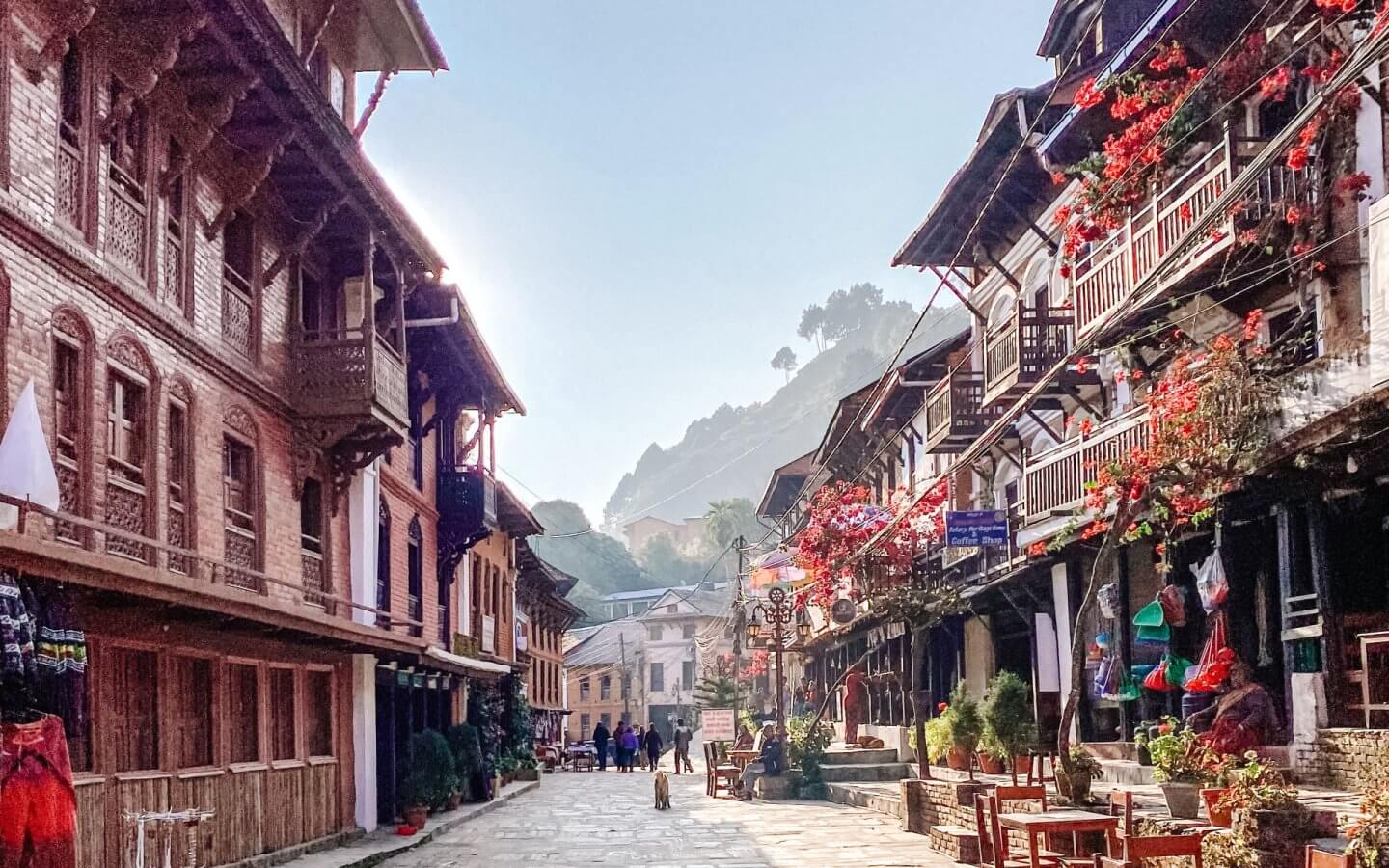
Halfway between Kathmandu and Pokhara, perched on a ridge above the Marsyangdi River valley, lies a small town that most travellers speed past on the highway below without ever knowing it exists. Those who stop discover Bandipur — and many of them say it is the highlight of their entire Nepal trip.
Bandipur is a living museum of Newari culture, a hilltop bazaar town that was once a prosperous trading post on the route between India and Tibet. When the highway bypassed it in the 1970s, Bandipur was left behind economically — and accidentally preserved. The main street is lined with beautifully maintained 18th and 19th-century merchant houses, their facades decorated with carved woodwork and hanging balconies. No vehicles are allowed on the stone-paved bazaar street. The air is clean and cool. The views of the surrounding Himalayan foothills are stunning.
On a clear day, Bandipur offers a jaw-dropping panoramic view of the Himalayan range — from Annapurna in the west to Manaslu and beyond — that rivals anything you will see from Pokhara. Watching the mountains catch the first light of dawn from the Thani Mai hilltop above the village is one of those wordless experiences that every serious traveller lives for.
There is also a wonderful bat cave (Siddha Gufa) on the edge of town — the largest cave in Nepal — and the Bindabasini Temple that locals visit each morning in a gentle procession of colour and quiet devotion.
Bandipur is the kind of place that reminds you why you travel. No crowds, no rush. Just beautiful old streets, the smell of morning woodfires, and mountains filling the horizon. After the intensity of Kathmandu's sacred sites, it is the perfect reset before Pokhara.
6. Sunrise at Sarangkot — The Moment Everything Goes Gold
You will set your alarm for 4:30 in the morning. You will drag yourself out of a warm bed in the dark, pile into a jeep, and wind your way up a hillside above Pokhara in sleepy silence. And then the mountains will appear, and you will forget you were ever tired.
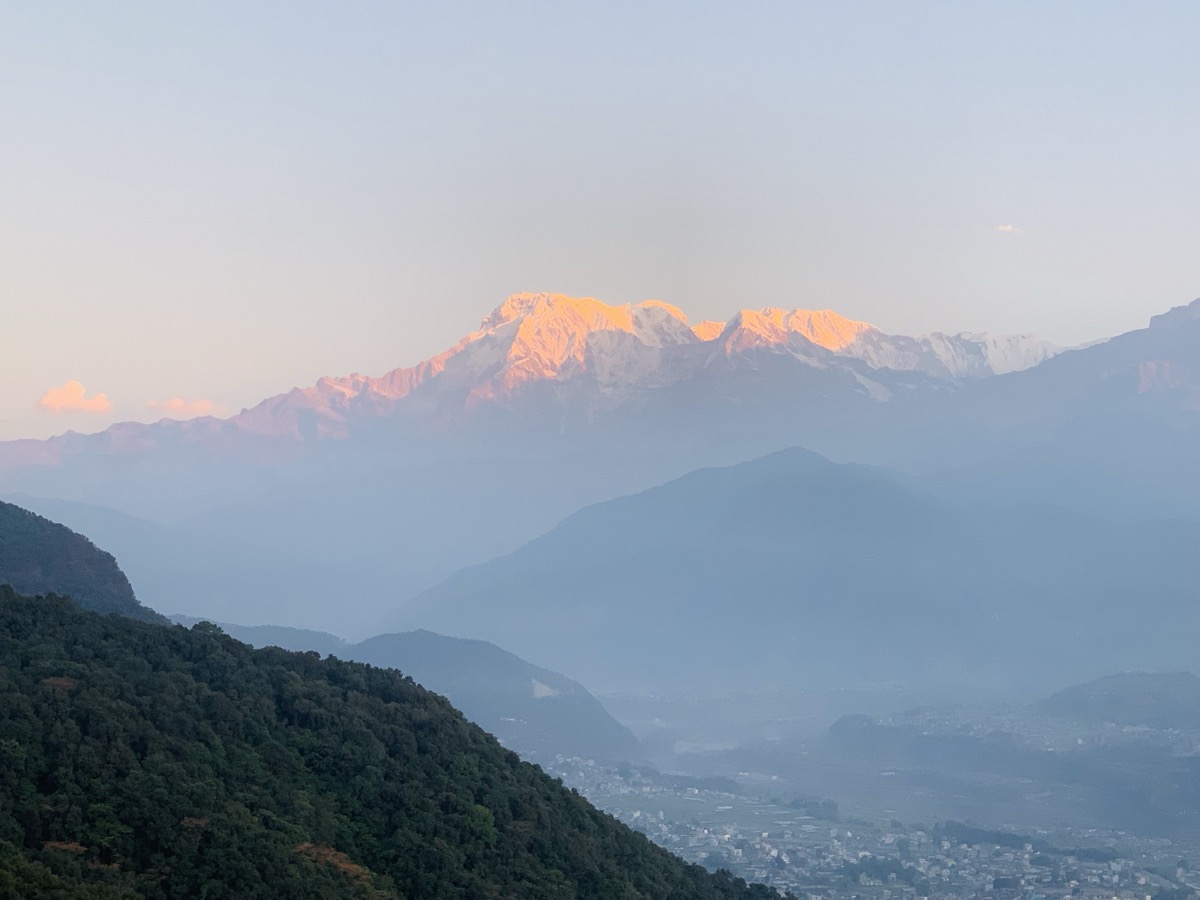
Sarangkot is the ridge above Pokhara from which the Annapurna and Dhaulagiri ranges reveal themselves at sunrise in what can only be described as one of the greatest natural spectacles on earth. The peaks — Annapurna I (8,091 m), the perfect fishtail silhouette of Machhapuchhre (6,993 m), the immense bulk of Dhaulagiri (8,167 m) — sit in a line across the northern horizon like the teeth of some extraordinary crown.
For about twenty minutes, as the sun rises behind you, the mountains go through a transformation: deep violet to mauve, mauve to rose, rose to blazing gold, gold to brilliant white. The valley below is still in shadow. And then the light hits Phewa Lake and it ignites like a second sunrise on the water.
People cry at this. Seasoned travellers who have been everywhere. They cry, and nobody finds it strange, because the mountains at dawn do that to you.
After the sunrise, Sarangkot is also the most popular launch site for paragliding over Pokhara — if you have ever considered hurling yourself off a ridge with a parachute, this is where to do it.
7. Phewa Lake — Pokhara at Its Most Beautiful
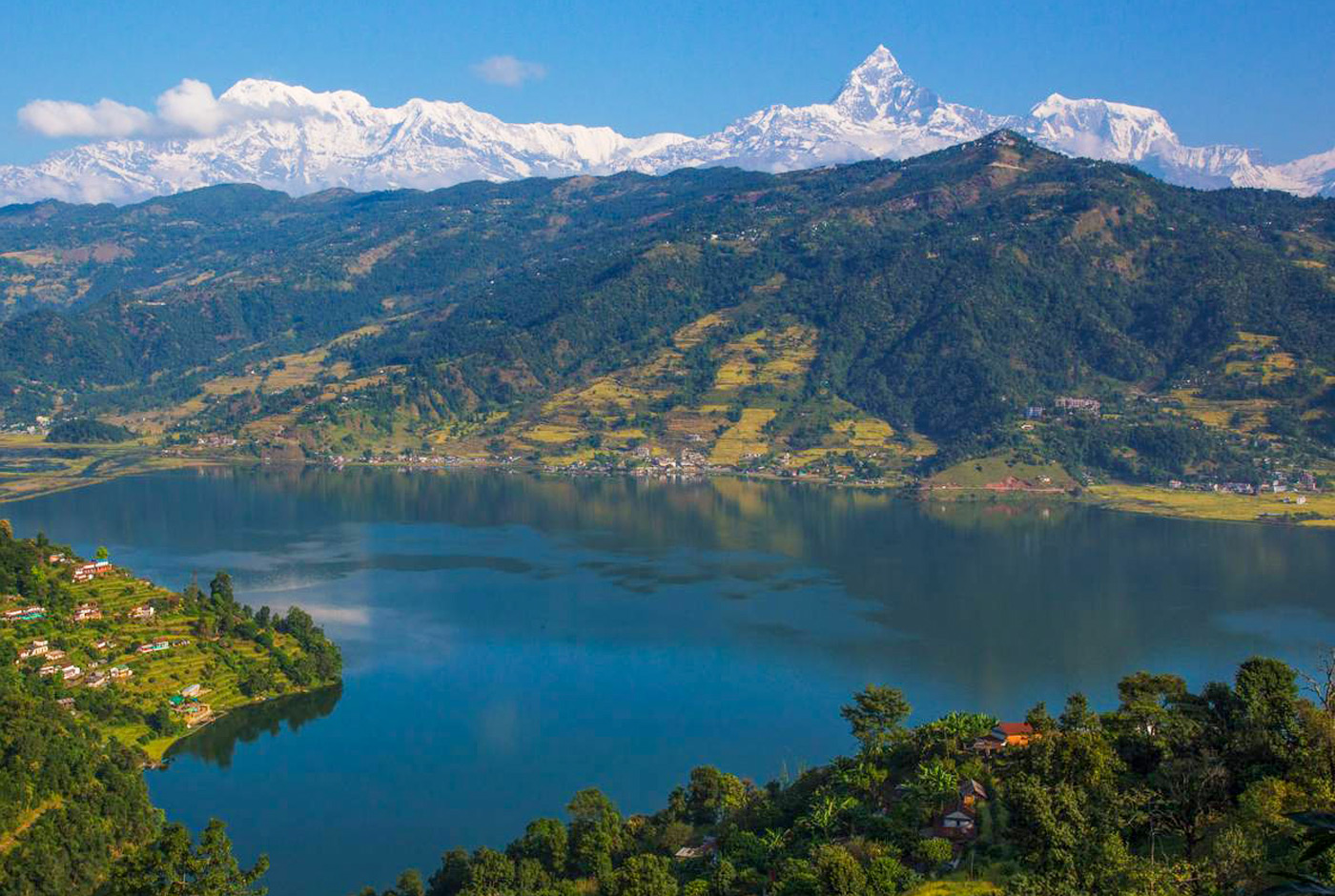
Pokhara is built around water. The entire city slopes gently down to the northern shore of Phewa Lake, a broad, still body of water that mirrors the sky and, on clear days, the white triangle of Machhapuchhre above it. Sitting at a lakeside restaurant with a coffee as the mountains float above their own reflection is the defining image of Pokhara for a reason.
Rent a wooden rowboat and paddle out onto the lake in the early morning, when the water is glassy and the Pokhara waterfront is quiet. Row to the small island at the lake's centre, where the Tal Barahi Temple — a two-storey pagoda dedicated to the goddess Barahi — sits surrounded by water, visited by a steady procession of devotees crossing over by boat.
On the far shore, a trail leads through subtropical forest up to the World Peace Pagoda, a gleaming white Buddhist monument built by Japanese monks and one of the finest viewpoints in the region. The hike takes about 45 minutes each way and offers continuously changing views across the lake and back toward the Annapurnas. As with Boudhanath's stupa in Kathmandu, there is a quiet power to the Peace Pagoda that lingers long after you have come back down.
The lakeside promenade is also where Pokhara's café culture lives — row after row of restaurants, book shops, and rooftop bars where travellers gather in the evenings to compare stories and plan tomorrow's adventures. It is relaxed, welcoming, and utterly infectious.
8. Pokhara's Adventure Scene — Paragliding Over the Himalayas
If Kathmandu is Nepal's soul and Bandipur is its heartbeat, then Pokhara is its adrenaline. The city is the undisputed adventure capital of the country, and the experiences on offer here — paragliding, zip-lining, white-water rafting, ultralight flights, bungee jumping — are world-class by any measure.
Nothing beats paragliding from Sarangkot — the same ridge where you watched sunrise over the Annapurnas. Strapped into a harness with a certified tandem pilot, you run down a grassy slope, catch the thermal, and suddenly you are airborne, spiralling up over Phewa Lake with the white wall of the Himalayas filling your entire field of vision.
The flight lasts 30 to 45 minutes, and it is nothing like what you imagine. It is not terrifying. It is impossibly peaceful — warm air, silence broken only by the rustle of the canopy above, the green valley spread below you, and mountains you had to tilt your head back to see now sitting at eye level across the horizon. It is the closest most of us will ever come to understanding what it means to be completely free.
For those who prefer thrills closer to the ground, the Seti River gorge cuts dramatically through the city itself — you can peer down into its narrow white-water canyon from bridges in the middle of Pokhara, or organise rafting trips on the nearby Kali Gandaki.
9. Jeep Safari in Chitwan National Park
From the mountains to the jungle. The final destination on the Nepal Golden Triangle route takes you south across the Terai lowlands to Chitwan National Park — a UNESCO World Heritage Site and one of the finest wildlife reserves in all of Asia.
The transition is startling. You leave behind the cool, clear air of the hills and descend into a warm, humid world of dense sal forest, waving elephant grass, and rivers thick with bird life. Chitwan covers 932 square kilometres and protects one of the last pristine examples of the Terai-Duar savanna and grassland ecosystem — a habitat that once stretched across the entire sub-Himalayan belt.
The best way to explore it is by open-top jeep safari, which gives you both range and elevation — you can cover ground quickly, stop silently, and spot animals from a safe but close distance. Early morning drives are particularly remarkable. The park is cool and misty, the animals are active, and the birdlife is deafening in the best possible way. Spotted deer browse in forest clearings. Peacocks fan their tails in the track ahead of you. A gharial crocodile slides off a sandbank into the river with barely a ripple.
Then your guide raises his hand. Everybody goes still. And in a gap between the trees, you see the grey armoured mass of a one-horned rhinoceros moving through the grass, ancient and unhurried. That moment — the held breath, the nearness of something wild and utterly indifferent to your presence — is the kind of thing that no photograph quite captures, and no amount of telling does justice.
A dugout canoe ride on the Rapti River adds yet another dimension. Drifting silently downstream past basking mugger crocodiles and watching hornbills cross overhead, you understand why people return to Chitwan again and again. It rounds off the wildlife experience in a way that feels deeply unhurried and real.
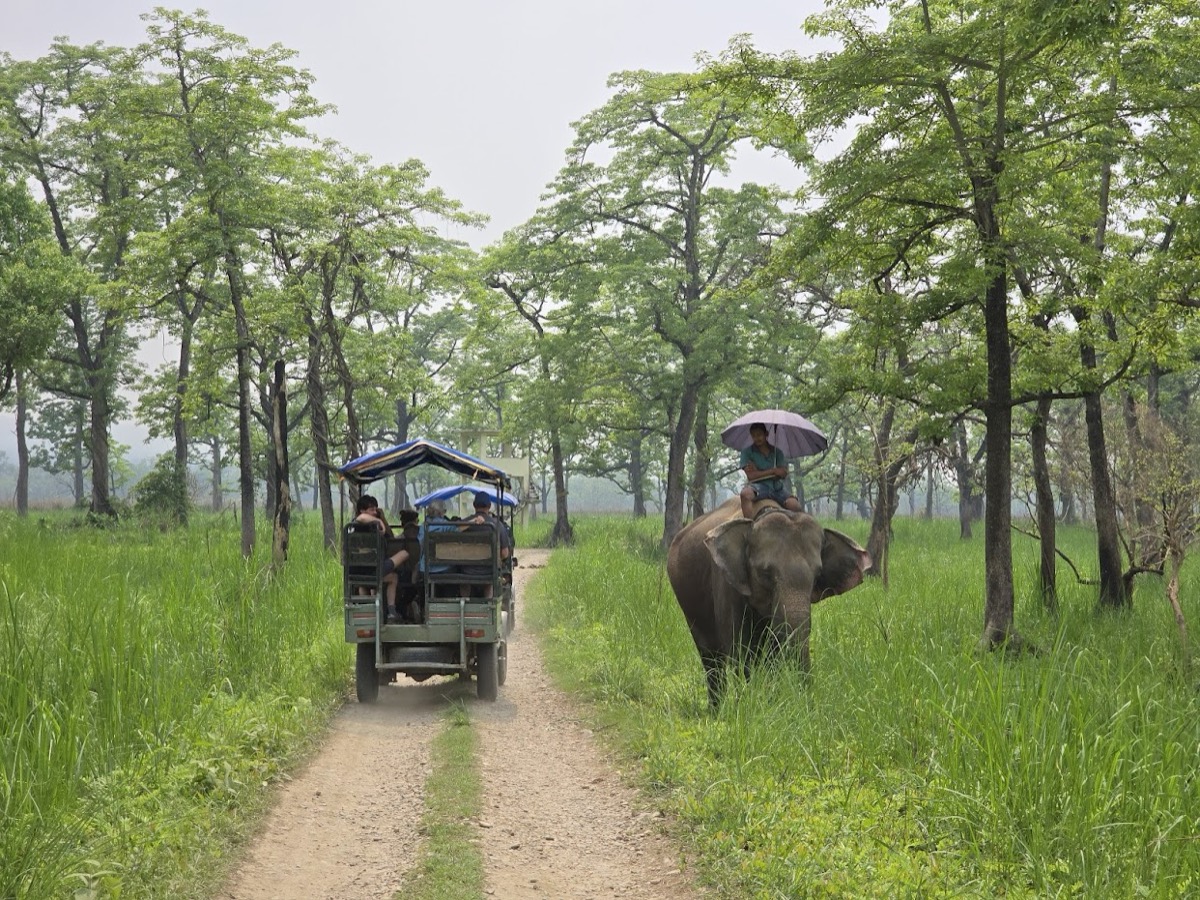
10. Tharu Culture and the Wild Heart of Chitwan
Chitwan's story is not only about wildlife. It is also about the Tharu people — the indigenous community that has lived on the edges of this jungle for centuries, developing a way of life so deeply entwined with the forest that they are as much a part of the ecosystem as the rhinos and the tigers.
The Tharu are thought to have developed a genetic partial resistance to malaria, which allowed them to inhabit the forested Terai when other communities could not. This long relationship with the jungle shaped a culture of extraordinary resourcefulness and beauty. Their traditional mud houses are painted with intricate geometric patterns in red, white, and black — an art form passed down from mother to daughter. Their handwoven textiles are some of the most distinctive handicrafts in Nepal.
An evening in a Tharu cultural village is one of the most genuinely warm experiences on the entire Golden Triangle Tour. Traditional stick dances performed around a central fire, the rhythm of madal and dhime drums, the easy laughter of performers who do this not for performance but for the love of their own tradition — it adds a human dimension to Chitwan that the wildlife safaris alone cannot provide.
Walking through a Tharu village the following morning, stopping for fresh buffalo milk tea at a local home, watching children head to school and elders begin the morning rituals of another day — this is travel at its richest and most honest. It brings you back to the same truth that Pashupatinath revealed in Kathmandu, that Bandipur whispered on its hilltop street: that the deepest reward of travel is not the landscapes or the monuments but the encounter with lives genuinely, beautifully different from your own.
When to Go
October and November are the gold standard — post-monsoon skies are crystal clear, mountain views are at their sharpest, and the weather across all three destinations is mild and comfortable. March and April run a very close second, with the added bonus of rhododendron forests blazing red and pink across the hillsides above Pokhara.
December and January are cool and clear — excellent for Kathmandu and Chitwan, though early mornings in Pokhara can be cold. Avoid the monsoon months of June through August if mountain views matter to you.
One Last Thought
There is a moment — it happens to almost everyone who does this tour — when you realise that Nepal has quietly exceeded every expectation you arrived with. Maybe it happens at dawn on Sarangkot when the Annapurnas light up and your brain simply cannot process the scale of what it is seeing. Maybe it happens in the narrow streets of Bandipur when a child waves from a carved wooden window. Maybe it happens in a jungle clearing when a rhinoceros lifts its head and looks at you with ancient, unhurried calm.
Whenever it happens, pay attention. That is Nepal doing what Nepal does — turning travellers into people who can never quite look at the world the same way again.